Flexibility beats the “perfect” itinerary
At 7:18 a.m. in Milano Centrale, I hovered over a €29 “Super Economy” train to Florence while my weather app showed thunderstorms rolling in by lunch. The cheaper fare was nonrefundable, and the platform board already had a delay warning blinking in amber. I could lock it in and feel efficient, or pay €12 more for a ticket I could actually move.
That little checkout screen is where the “perfect” itinerary usually wins on paper and loses on the ground. A minute-by-minute plan assumes trains run clean, museums don’t cap entry early, and your energy stays flat across a 14-day PTO sprint—none of which is guaranteed when you’re hopping 4–5 cities. Flexibility isn’t vagueness; it’s buying options. The refundable fares and hotels cost more, but they protect your limited vacation hours from getting spent on rerouting, rebooking, or sulking in a station café because you committed too hard.
For a midrange €150–200/day trip, I treat “perfect” like a draft and pay for selective wiggle room: one or two high-demand anchors, then adjustable transport around them. It works best if you’re solo and willing to swap a sunrise departure for a late-morning one; it works worse if you need the absolute cheapest tickets or you hate uncertainty. If you can tolerate a small premium, the ability to pivot when rain hits or a late night happens is usually the better bargain.
Choose anchors, not a minute-by-minute plan
At 10:46 p.m. in a Lisbon hostel kitchen, I watched three different “Day 6” alarms stack up on my phone—sunrise tram photo, timed palace entry, then a 1:30 p.m. train—while someone next to me kept saying, “Just wing it.” I’d built a beautiful chain of exact times, and it only took one late dinner and a slow metro connection for the whole thing to feel like a test I hadn’t studied for.
What worked better was choosing two kinds of anchors: one “can’t-miss” ticketed thing per city (a museum slot, a stadium tour, a concert) and one “physics” anchor (a hotel check-in window, a long-distance train, a flight). Everything else lived in wide blocks. Compared to minute-by-minute plans, this keeps the day from collapsing when you hit a line you didn’t predict, or when your legs decide they’re done at 3 p.m. You might miss a specific sunset viewpoint, but you stop burning paid vacation time sprinting between “must”s.
For a 14-day, 4–5 city run, I aim for: 1–2 prebooked anchors per city, then one empty half-day every three days as a shock absorber for weather, laundry, or just being tired. It’s especially good for solo travelers who can swap priorities fast; it’s rougher if you’re chasing limited-release tickets or you need the cheapest, locked-in train fares. If you’re unsure, anchor the hardest-to-get thing—and leave your mornings negotiable.
Build transit days that don’t ruin cities

At 6:12 a.m. in Porto-Campanhã, I realized my “easy” hop to Madrid was actually two trains, a 42-minute connection, and a station change that looked short on Google Maps but felt long with a backpack and a coffee I shouldn’t have bought. The first train ran 18 minutes late, and suddenly my midday “arrival lunch” plan was a quiet competition between stress and gravity. I could force the connection and maybe win, or accept the slower option and keep the day intact.
The transit-day fix is boring on purpose: treat moves like half-days, not bonus sightseeing. When you’re changing cities, plan for one meaningful thing after arrival—something that survives delays, like a neighborhood walk or a market—rather than stacking “museum + viewpoint + dinner reservation.” Compared to a tight schedule, this wastes fewer paid PTO hours on rerouting, locker hunts, and trying to check in early when your hotel won’t budge. You’ll “do less” that day, but you’ll arrive functioning instead of fried.
Booking-wise, I’ll lock the long-haul leg early only when it’s truly capacity-limited (popular high-speed routes, holiday weekends) or when a seat reservation is mandatory; otherwise I prefer a fare I can move, even if it’s €10–20 more. Rail passes can feel flexible, but the reservation layer can turn them into a scavenger hunt—great if you’re organized, annoying if you decide at 9 p.m. what tomorrow is. If I’m on the fence, I’ll choose a later departure and keep one backup route bookmarked, because the “best” train is the one that still works when you wake up tired.
Book stays that allow last-minute shifts
At 4:37 p.m. in Seville, I stood in the lobby watching a line form behind a tour group while my phone kept refreshing a “nonrefundable” rate I’d booked to feel responsible. The room was cheaper by about €22, but it also pinned me to a checkout clock the next morning—right when the forecast flipped to 38°C and the idea of another hard transit day felt like self-sabotage. I could eat the cost and move, or stay put and pretend my energy was negotiable.
For multi-city trips, the stay is the easiest place to buy flexibility without turning your whole budget into a shrug. I try to book cancellable options for all but one “anchor” city (usually the priciest or most supply-constrained), then treat the rest as adjustable placeholders. You’ll pay a little more than the rock-bottom, no-cancellation deals, but you’re purchasing the ability to add a rest night, leave a day early, or dodge a heat wave without doing a full replan.
Practically, I look for three things: free cancellation until at least 24–72 hours before check-in, pay-later or small deposits (so my cash isn’t trapped), and properties that don’t punish you with weird check-in windows when trains slip. It works well for a solo traveler hopping 4–5 cities, because one person can change course fast; it’s tougher in peak weeks when “flexible” inventory disappears. If you’re unsure, lock the hardest city first, then keep one refundable backup stay in the next stop—so your spontaneity has somewhere to land.
Pack and plan for quick pivots
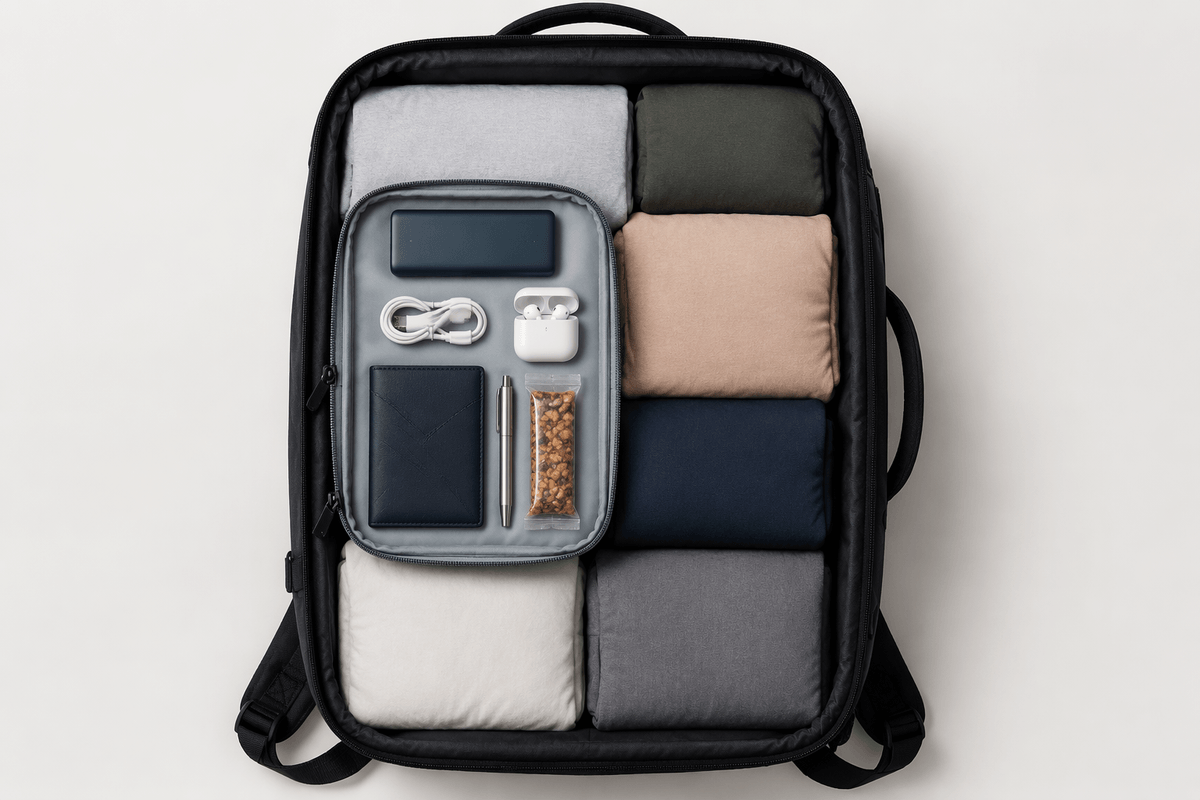
At 8:03 a.m. in Amsterdam Centraal, I realized my “quick” platform change was going to be a jog when the departure board flipped and my gate moved from 10b to 15. I had one hand on a coffee, the other digging for a charging cable I’d buried under clothes, and the backpack suddenly felt heavier than it did ten minutes earlier. That tiny scramble was the moment I stopped treating packing as a vibe and started treating it as a speed system.
For a multi-city sprint, pack so you can repack in under five minutes without turning your bed into a yard sale. I keep a “pivot pouch” at the top: power bank + short cable, earbuds, passport wallet, a pen, and a snack—stuff that saves you when you’re rerouting or waiting out a delay. The trade-off is bringing duplicates (one extra cable, one extra card) instead of one perfect minimalist setup, but it’s worth it if you’re moving every 2–3 nights; it’s less useful if you’re staying put and doing laundry leisurely.
Planning-wise, I screenshot the cancellation deadlines for my next stay and save two backup routes between cities (fast + cheap) in one note, plus the station names spelled correctly for ticket machines. Offline maps help when you’re underground or your eSIM decides to be dramatic. If you want spontaneity without chaos, build in “friction budget”: a small cash buffer and a little physical space in your bag, so the last-minute plan can actually fit.
My default flexible Europe game plan
At 9:14 p.m. on a Sunday in a Barcelona café, I had two tabs open: a €39 nonrefundable high-speed ticket for tomorrow and a flexible fare that was €18 more. My phone battery was at 12%, and I could feel that familiar pressure to “just decide” before sleep. I didn’t want spontaneity to turn into a 6 a.m. panic scroll.
My default game plan is simple: I lock in the skeleton, leave the joints loose. I’ll prebook (1) the arrival and departure flights, (2) the first 2–3 nights in City #1, and (3) one high-demand anchor per city (timed museum, stadium tour, special show). For stays, I bias toward free-cancellation options until 24–72 hours out, even if they cost a bit more than the rock-bottom rate, because it buys me an extra rest night when heat, rain, or fatigue hits. If I’m doing 4–5 cities in 14 days, I also keep one “float night” unassigned or booked refundable in the middle.
For trains, I decide route-by-route: if the line is reservation-heavy or sells out (popular high-speed corridors, holiday weekends), I book early; if it’s frequent, I pay for a changeable fare and keep two departure times in mind. Rail passes sound flexible, but the reservation layer can be the hidden limiter—great if you’re planning ahead, annoying if you’re deciding after dinner. If a change would cost me more than €30 or half a day, I buy flexibility; if not, I buy the cheaper ticket and move on.