Why bananas feel like a “healthy default” snack
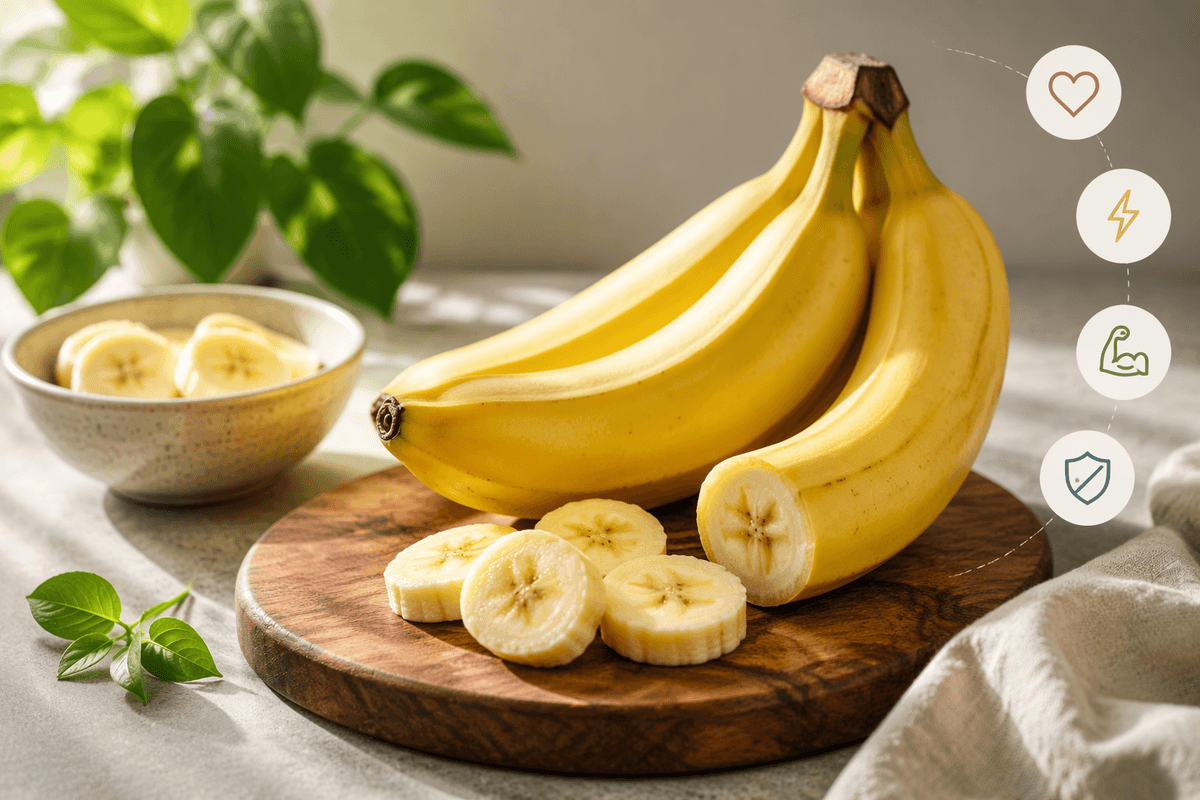
You’re halfway out the door, and the banana is already there—on the counter, in the car cupholder, in the bottom of a work bag. It doesn’t leak, it doesn’t need a knife, and it feels “safe” in a way that a granola bar or pastry doesn’t, even if you haven’t looked at a label in years.
Part of that confidence comes from how familiar the trade-off is: bananas are mostly carbohydrates, but they usually come with enough fiber and water to feel steadier than candy. Still, the experience isn’t always consistent. One day it feels like clean fuel; another day it disappears fast and you’re hungry again before the next meeting.
That mismatch is often where the “Is this actually healthy?” doubt creeps in. A banana isn’t just sugar, but it isn’t a protein snack either. It’s a compact carb-and-nutrient package—helpful for quick energy and regularity for many people, yet easy to misread when eaten on autopilot.
Carbs and fiber: quick fuel with nuance
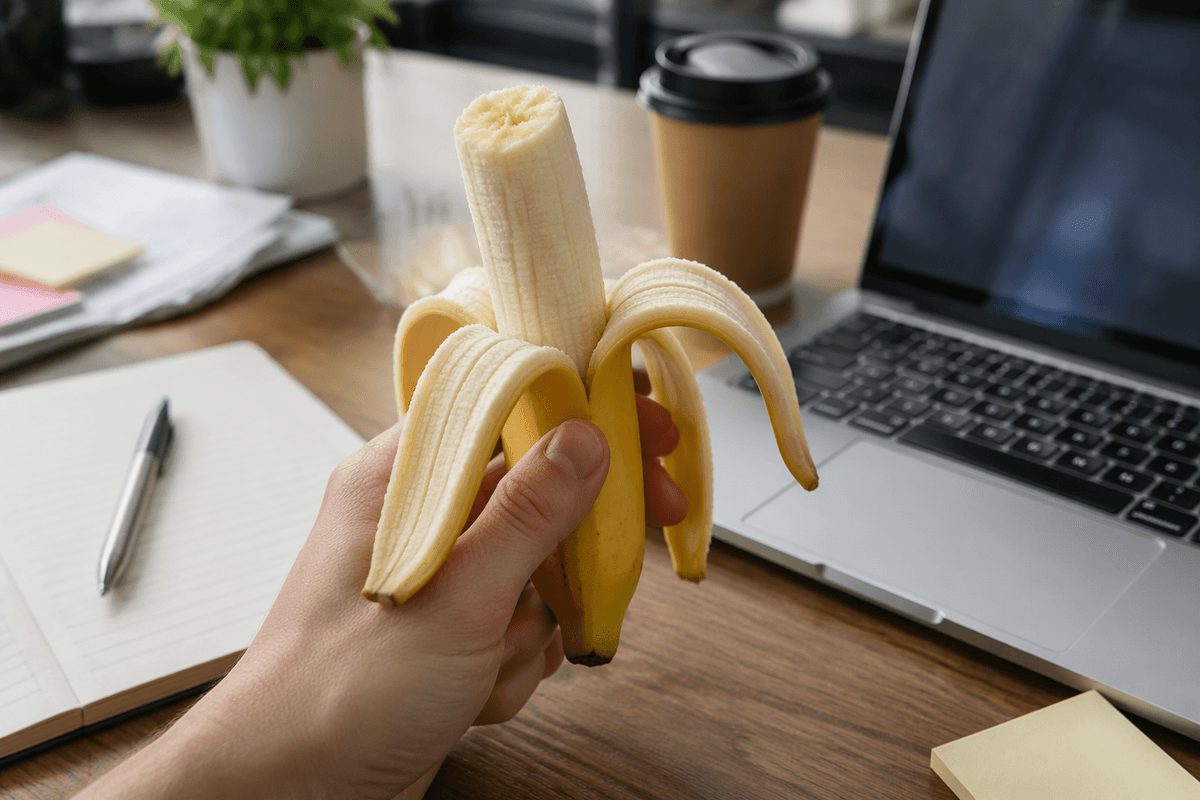
The first bite can feel almost like a reset—sweet, soft, and easy on a rushed stomach. But the “energy” you get from a banana isn’t a single thing. It’s mostly carbohydrate, and the way that carb behaves depends on details people rarely pay attention to when they’re eating it one-handed between tasks.
A banana is a mix of sugars and starch, plus some fiber and a lot of water. In practical terms, that often means a quick bump in fuel with a bit of buffering from fiber, so it can feel steadier than juice or candy. Still, it’s not unusual to notice an hour later that your focus dips or your hunger comes back, especially if the banana was the whole snack. The body can move through easy-to-digest carbs fast, and fiber only slows that down so much.
Portion and context matter more than most people expect. A small banana before a walk may feel perfect, while a large, very ripe one eaten alone at a desk may feel like it “vanished.” That doesn’t make bananas “bad”—it’s just the nuance of quick carbs showing up in real life.
Potassium is real, but not the whole story
Sometimes the banana feels like it “worked” simply because your legs don’t feel as heavy later, or a lingering cramp worry quiets down. That’s usually where potassium enters the conversation—almost like a badge that proves the snack is doing something useful, not just tasting sweet.
Potassium is real value, especially for busy days when you’re sweating, rushing, or living on packaged foods that skew salty. It helps with fluid balance and the electrical signaling your muscles and nerves rely on. But a banana’s potassium isn’t a free pass that cancels everything else out. You’re still eating a serving of carbs, and if it’s very ripe (and fast-digesting for you), you might notice the familiar pattern: quick lift, then hunger returning sooner than expected.
In practice, potassium is one meaningful piece of the package—not the whole story. If the snack feels “too light” or oddly jittery on some days, that’s often less about potassium and more about how quickly your body is moving through the banana on its own.
More than potassium: B6, vitamin C, magnesium
There’s a quiet moment when you realize you’ve been using “potassium” as shorthand for the whole banana. You toss one in your bag thinking you covered your bases, then later you’re still surprised when the snack doesn’t feel as steady as you expected.
Part of what gets overlooked is the supporting cast. Bananas contribute vitamin B6, which your body uses in processes tied to using and moving energy from food. They also bring some vitamin C—less than citrus, but still part of the day’s background maintenance—and a small amount of magnesium, which shows up in muscle and nerve function. None of these are dramatic in a single bite, and that’s the point: they’re more like “keep things running” nutrients than a noticeable kick.
A banana can be nutrient-dense in a few ways and still feel “too fast” if it’s very ripe or eaten alone. The micronutrients don’t slow digestion; the carb pattern still leads the experience.
Ripeness changes digestion, comfort, and reactions
You can usually tell how the next hour will go from the texture. A firmer, slightly green banana tends to sit differently than one that’s heavily speckled and almost creamy—sometimes in a good way, sometimes not, depending on what your stomach is doing that day.
As bananas ripen, more of their starch shifts into sugars. In real life, that can mean the riper banana tastes sweeter and often feels “faster,” because there’s less resistant starch to slow things down. A less-ripe banana may feel more filling for some people, while a very ripe one can feel like it disappears quickly, especially if it’s the only thing you ate between meals.
Comfort can change, too. Some people notice that greener bananas feel heavier or more bloating, while very ripe bananas feel easy but can bring a quicker hunger rebound or a slightly jittery “quick fuel” sensation if the timing is off. It’s not that one ripeness is universally better—it’s that the carb form changes, and your day’s context (stress, coffee, empty stomach) changes how noticeable that becomes.
When a “smart snack” creates unexpected discomfort

It often shows up as something small: a slightly gassy feeling at your desk, a stomach that feels oddly hollow 30–60 minutes later, or a sweet aftertaste that makes you want more snacks than you planned. The banana still “counts” as a healthy choice, yet your body’s response doesn’t match the tidy story you tell yourself about it.
A common pattern is that the banana goes down easily, then moves through quickly—especially when it’s very ripe and eaten on an empty stomach. With more of the starch already converted to sugars, some people notice a faster lift followed by a quicker drop in energy or mood. Add coffee, stress, or a long gap since your last meal, and that swing can feel sharper, even if the portion wasn’t huge.
Discomfort can also be more mechanical than people expect. If you eat fast, or grab a banana while walking, you may swallow more air and miss the “I’m full” signals that show up with slower snacks. And for some routines, the fiber is enough to change regularity—helpful on one week, crampy or bloating the next—depending on hydration and what else you’ve been eating.
Bananas compared with other fruit in practice
It’s easy to notice it only when you switch fruits for a day. You grab an apple instead and end up chewing longer, feeling fuller—then the next morning a banana feels almost too smooth, like it never asked your body to “work” for it.
In practice, bananas tend to behave more like quick fuel than many crisp fruits. Apples and pears often feel steadier because they’re typically slower to eat and can feel more “holding,” while grapes or a glass of juice can feel faster and less filling. Berries can land differently too: they’re sweet, but the portions people eat are often smaller and more fiber-forward, so the energy curve may feel flatter.
None of this makes bananas worse; it just explains why they’re a different tool. A ripe banana can be the most convenient carb in the fruit drawer, but if you keep noticing a quick lift-and-hunger rebound, it may be less about “too much sugar” and more about how rapidly this particular fruit tends to move through your routine.
A revised way to think about banana nutrition
Some days the banana feels “too sweet,” and you catch yourself doing the math in your head—sugar, carbs, calories—like that’s the only score that matters. Then you remember how different it felt last week when you ate a firmer one before errands and didn’t think about food again for hours.
A more useful frame is that a banana is a compact carb-and-micronutrient package: carbohydrates that can land fast or slow depending on ripeness, plus fiber, potassium, vitamin B6, some vitamin C, and a little magnesium. The nutrients are real, but they don’t override the carb timing—especially if your body moves through ripe fruit quickly.
So the question usually isn’t “Is a banana healthy?” so much as “Is this the right banana for this moment?” Portion, ripeness, and whether it’s alone or alongside something more grounding can be the difference between steady fuel and that familiar, slightly hollow rebound.