The quick lift that rarely lasts long
It usually starts as a small correction: a sweet coffee between meetings, a couple bites of candy in the car, a “quick” pastry because lunch is sliding later. Ten or fifteen minutes later, the fog lifts and your body feels more cooperative—hands steadier on the keyboard, thoughts moving faster, mood a touch lighter.
Then the edge comes off. You may notice a soft dip first: yawning, a heavier forehead, a sudden impatience that doesn’t match what’s happening around you. In some situations, that early lift is tied to a fast rise in blood glucose, followed by insulin stepping in to move that sugar out of the bloodstream. When the swing is steep, the drop can feel bigger than expected, even if you’ve eaten “enough” overall.
One day the snack seems to work; another day it leaves you scanning for more food an hour later. It can start to feel like you need sweetness just to get back to neutral.
Blood sugar swings and the body’s counter-moves
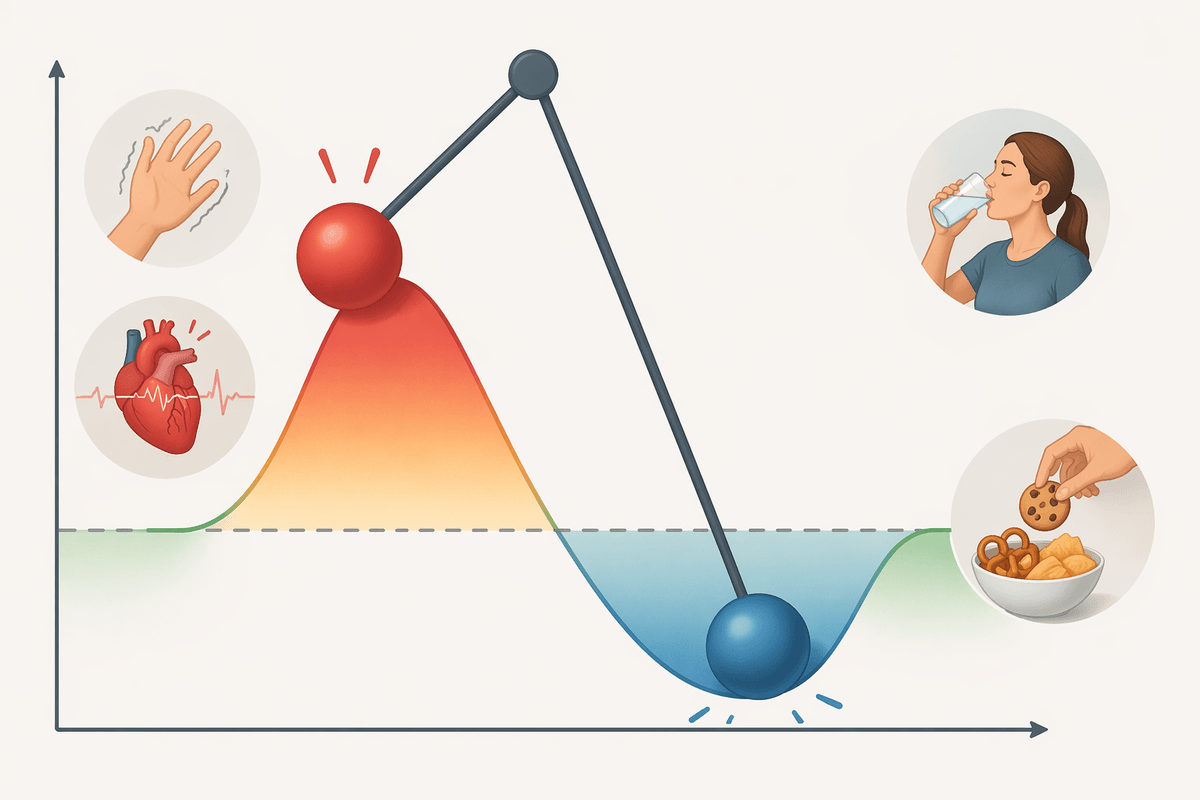
Sometimes the first clue isn’t even hunger—it’s how quickly you feel thirsty again, or how your heart feels a little too present after something sweet. You might assume it’s stress or too much coffee, but it can also be your body reacting to a rapid rise in glucose and then trying to “fix” it fast.
When a sugary drink or snack hits the bloodstream quickly, insulin tends to rise to move that glucose into muscle and liver, and to store the extra. If the surge is big, the response can be big too, and the pendulum can swing past comfortable. That’s when the crash can feel like shakiness, irritability, or a hollow, urgent need to eat—more about getting stable than getting full.
Over weeks, repeated swings can change what “normal” feels like. You may notice you’re reaching for bigger portions to get the same lift, or snacking sooner than you used to, with waist changes that don’t match your effort. It’s not always dramatic, but the pattern can quietly train your appetite around correction, not true fuel.
Hunger and cravings that intensify after sweetness
It can be oddly specific: you finish something sweet and, instead of feeling satisfied, you’re already eyeing the next thing. Not necessarily “more dessert,” either—something salty, something crunchy, something that feels like it will finally land. The confusing part is how fast it shows up, like your appetite got louder right after you fed it.
When blood sugar rises quickly, the body often answers with a strong insulin push to clear it. If that push overshoots, hunger can show up as a kind of internal urgency—less a gentle stomach cue and more a restless, distracted drive to fix the dip. In that moment, fullness signals tend to get drowned out, and it’s easy to interpret the feeling as needing a bigger portion than you actually planned.
Over time, sweetness can start to act like a trigger rather than a finish line. You might notice you “need” a snack after a sweet drink, or that afternoon cravings feel sharper on days you start with something sugary, even when your total calories don’t look extreme.
Why energy feels uneven even with enough calories

Midafternoon, it may hit as a strange mismatch: you ate breakfast, you grabbed a snack, you’ve had plenty of calories—yet your legs still feel heavy walking to the printer, and your brain keeps slipping off the task. It’s easy to blame sleep or willpower, especially when you’re not truly hungry in a stomach sense.
One reason energy can feel uneven is that “enough” food isn’t the same as steady fuel. A sweet snack can drive glucose up fast, and insulin can move it out of the bloodstream just as quickly. If that clearance happens faster than your body can shift to using stored energy, you can feel flat or foggy even while energy is technically available—just not arriving in a smooth, usable way.
Stress, a rushed meal, or sitting still for hours can change how strongly your body reacts, so the same drink that feels fine on one day can leave you dragging on another.
Gut, skin, and headaches: subtle feedback loops
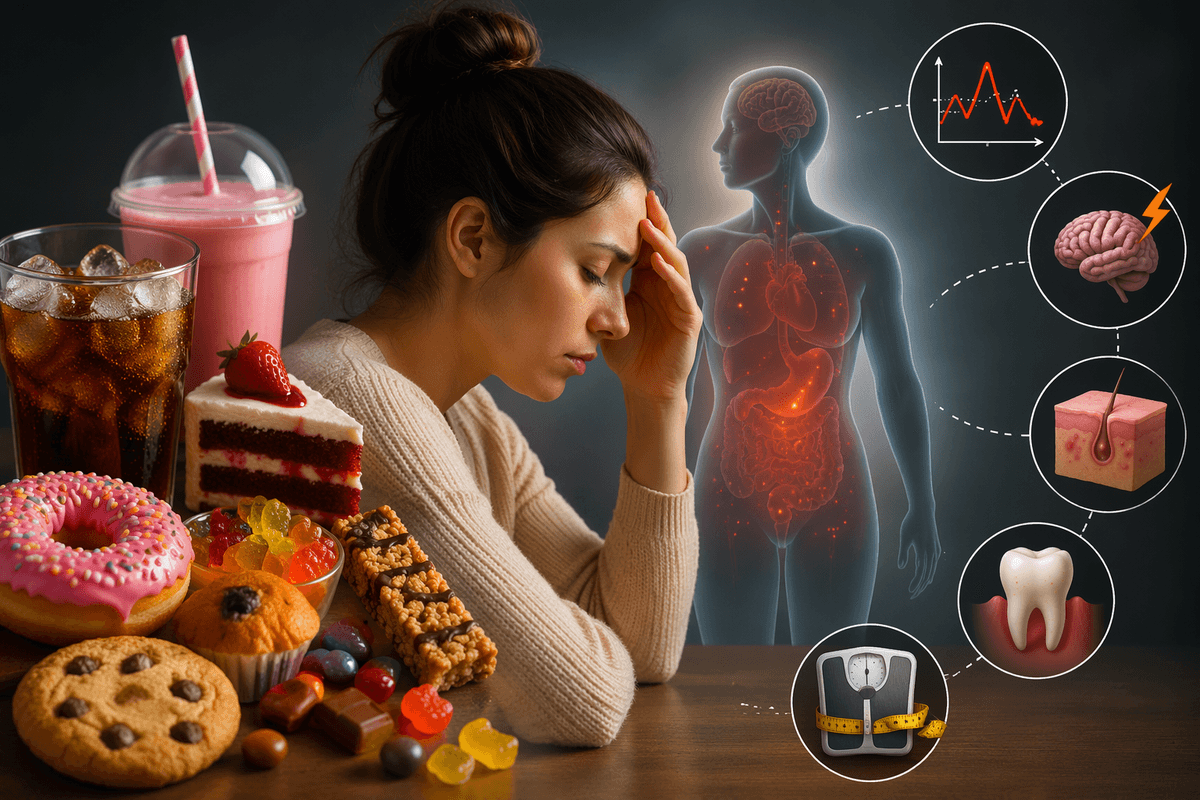
It can show up as a smaller annoyance first: your stomach feels a little more bloated after the usual sweet snack, or your face looks slightly puffier in photos, or you notice a dull headache that seems to arrive right when you’re trying to push through the afternoon. A lot of people chalk it up to dehydration, screens, or “just getting older,” because none of it feels dramatic on its own.
But quick sugar hits don’t just affect energy. In some situations, they pull water along with them in the gut and can leave you alternating between feeling “too full” and then oddly empty again. The rebound drop after a spike can also make your nervous system feel touchier—head pressure, light sensitivity, a shorter fuse—especially if you’ve paired sweetness with caffeine and a rushed morning.
Skin can get folded into the same loop. Higher insulin levels can nudge oil production and inflammation upward for some people, so breakouts may line up with weeks where sweets are doing more of the day-to-day heavy lifting. The trigger might be yesterday’s pattern, not today’s one snack.
The ‘healthy swap’ that sometimes backfires
It often looks like progress on paper: you trade soda for fruit juice, candy for a granola bar, a “coffee dessert” for a smoothie that sounds cleaner. For a few days it may even feel steadier—until the familiar dip creeps back in and you catch yourself pouring a bigger glass or adding a second snack “because it’s healthy.”
The backfire usually isn’t about the label; it’s about speed and dose. Many “better” options are still easy to take down quickly, and some deliver a concentrated hit of sugar without much chewing or protein to slow the exit from your stomach. That can mean a similar glucose spike, a similar insulin response, and the same crash-then-crave loop—just wrapped in a more reasonable story.
You may feel virtuous and still feel hungry, or you may notice your portions drifting up even while your choices look improved. Sometimes that’s the quiet clue: the swap changed the optics more than the pattern.
Long-run wear on metabolism and oral health
After a few weeks, it may not be the crash that stands out anymore—it’s the background noise. You notice you’re grazing without fully deciding to, or your usual snack doesn’t register the way it used to. The waistband changes feel a little out of proportion to what you can remember eating, and routine labs come back with words like “borderline,” even though your day-to-day doesn’t feel that different.
Repeated sugar surges can quietly train the body toward higher insulin output, because insulin is the main tool for clearing glucose fast. In some people, that steady demand can make cells less responsive over time, so the same snack produces a smaller “settled” feeling and a stronger push to top off again. When that happens, appetite cues can drift toward quick correction—more frequent snacks, slightly larger portions, and easier fat storage around the middle—without any single meal looking extreme.
Meanwhile, the mouth gets its own version of the pattern. Frequent sweet sips and bites feed oral bacteria and keep the environment more acidic, especially when you’re slowly drinking something sweet across the afternoon. It’s not always obvious until sensitivity shows up, gums feel easier to irritate, or you realize the “all-day” drink habit acts less like one treat and more like repeated exposures.