You’re enrolling again, but next year is fuzzy
Open enrollment shows up right when everything else is moving: a possible job change, a spouse’s plan in flux, kids’ needs that might spike or stay quiet. The forms act like next year is knowable. They ask for a number—how much to set aside—before the year even starts, and before anyone knows whether the plan you pick will still fit in six months. The pressure isn’t just guessing medical bills; it’s guessing your own calendar and cash flow, and the penalty for being wrong can be real money.
That uncertainty is what turns “HSA vs FSA” into more than a tax choice. The account rules react differently when plans change midyear, when you need funds in January versus December, or when you end the year with leftover dollars. Before comparing savings rates, it helps to check the first constraint that quietly decides the whole path: whether you’re even allowed to open an HSA next year.
First fork: can you even open an HSA?
It usually gets decided in one line on the enrollment page: whether the medical plan option you’re picking is an HSA-qualified high-deductible health plan. If it isn’t, the HSA discussion ends quickly—an HSA isn’t something you “add on” later to a copay-heavy PPO. And even if the plan is labeled HSA-eligible, eligibility can still get knocked out by other coverage that feels harmless in the moment, like being on a spouse’s non-HDHP plan, using a general-purpose health FSA through either employer, or having certain first-dollar coverage that pays before you hit the deductible.
The practical friction shows up when next year is fuzzy. If there’s a real chance you’ll switch plans midyear, join a spouse’s plan, or your employer might move you to a different option, the risk isn’t just “less tax savings.” It’s excess HSA contributions that have to be unwound and reported. Before you pick a contribution number, confirm the plan is HSA-qualified and scan for any other coverage that would quietly make you ineligible.
Tax savings are similar—timing is not
Once HSA eligibility survives that first fork, the tax pitch starts to sound like a tie. Both accounts can reduce taxable income through payroll, and both are meant to turn routine medical spending into pre-tax spending. In practice, the decision usually breaks on timing, because the IRS rules don’t just care what you spend—they care when dollars become available and how forgiving the calendar is when life changes midyear.
An FSA is front-loaded: on January 1, the full annual election is available at the pharmacy counter even though the paychecks funding it arrive over the year. That’s helpful if you expect early expenses, but it can also create a hidden liability if you leave the job after using more than you’ve contributed—employers generally eat that loss, so they tighten rules elsewhere. An HSA runs on actual deposits: you can’t spend what hasn’t hit the account yet. If cash flow is tight in Q1, that difference can matter more than the headline tax rate.
The fuzziness around next year is why timing keeps winning. If you’re fairly sure expenses will be predictable and early, front-loaded access can be worth more than flexibility. If the year might include plan changes, income gaps, or a slow ramp of spending, the “available only after deposit” constraint can be easier to live with than an election that was too aggressive for the year you actually ended up having.
Access feels different at the pharmacy counter
January is usually when the difference stops being theoretical. The prescription is at the counter, the receipt is in your hand, and the question is whether the money is actually spendable right now. With an FSA, the card generally works as long as the expense is eligible, even if you’ve only had one paycheck so far. That “instant access” can be the whole point when an early refill, glasses, or a planned procedure hits before the year settles down.
An HSA can feel slower in the moment. If the deposit schedule lags and the balance is thin, the same purchase becomes a timing problem: pay out of pocket, or wait until contributions land. For families watching cash flow, that can be real friction. The trade is that an HSA lets you reimburse yourself later, so the pharmacy purchase doesn’t have to match the same week the account gets funded—assuming you keep the receipt trail clean enough to use it when the year gets messier.
Leftover money: keep it, roll it, or lose it
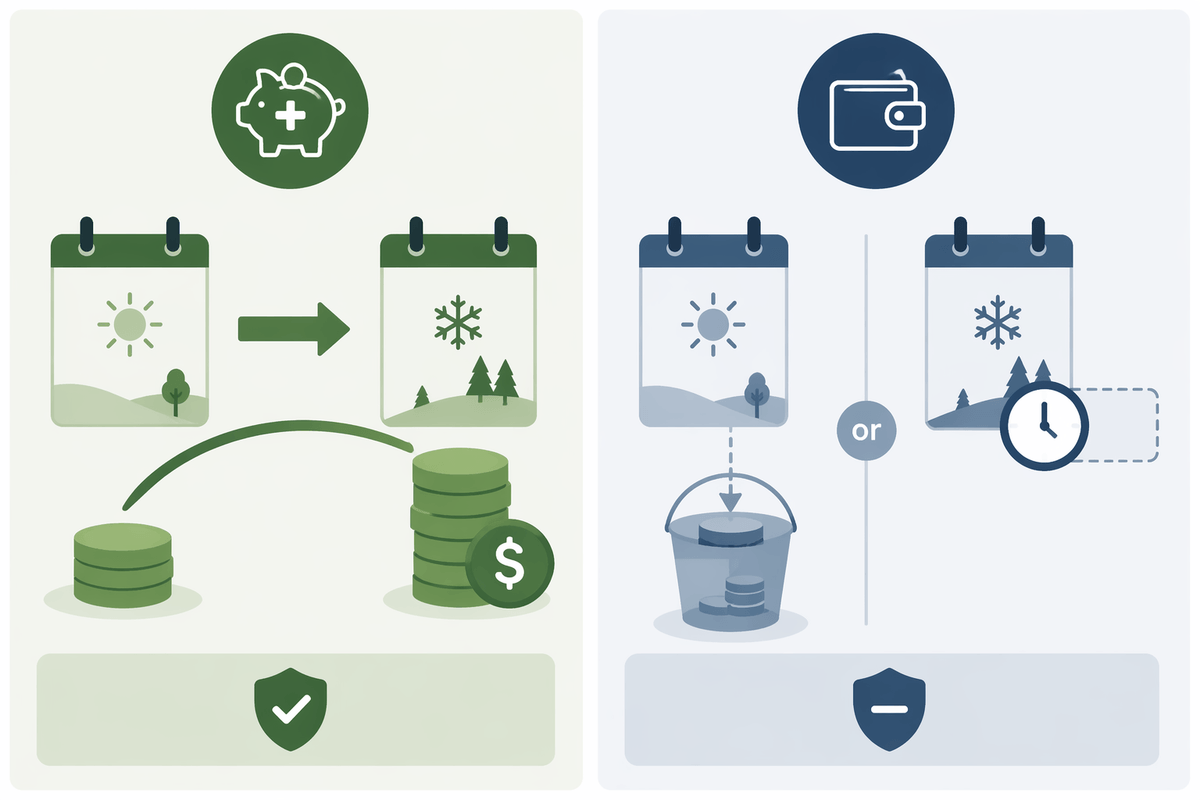
By late fall, the question shifts from “will I have enough?” to “what happens if I don’t use it?” That’s where the accounts stop feeling interchangeable. With an HSA, the leftover balance is simply still yours on January 1. If you had a quieter year, the money carries forward without a new election, and that makes underestimating less punishing—especially when next year’s plan choice is still uncertain and you don’t want a clean-up project in December.
An FSA is less forgiving, and the constraint shows up as a calendar problem. Depending on the employer’s setup, unused dollars may be forfeited, or there may be either a limited rollover or a short grace period—but not both. The practical move is treating the FSA as “known spend” money: recurring prescriptions, predictable therapy copays, or scheduled dental work. When spending is genuinely unclear, keeping the election smaller can cost a bit of tax savings but often avoids the bigger, more frustrating loss.
Ownership and job changes: whose money stays
The ownership question gets loud the moment a job change stops being hypothetical. With an HSA, the balance doesn’t belong to the employer-plan year—it belongs to the account holder. If you leave in March, the HSA goes with you, and you can keep spending it on qualified expenses whether the next plan is great, mediocre, or you’re between jobs for a while. The constraint is eligibility going forward: contributions may need to pause if the next medical plan isn’t HSA-qualified, but the existing dollars don’t evaporate.
An FSA behaves more like an extension of the current employer. When employment ends, access often ends quickly, unless you elect COBRA for the health FSA (and even then, the math is usually only favorable if you’ve already spent most of the annual election). That’s why overfunding an FSA feels fine in January and then becomes a scramble if a resignation date suddenly lands in May.
When “do both” creates confusion and penalties

Once people realize an HSA balance is portable and an FSA is spend-it-soon money, the temptation is to stack them and “cover everything.” The trap is that the common version of a workplace health FSA is general-purpose, which quietly makes an HSA contribution ineligible for the same months. In a fuzzy year—spouse changes jobs, you switch plans midyear—that overlap can happen without anyone noticing until tax time, when excess HSA contributions need to be pulled back out and reported, often with extra paperwork and avoidable tax.
The cleaner version of “both” is narrower, but it depends on what your employer actually offers. A limited-purpose FSA (typically dental/vision) or a post-deductible FSA can preserve HSA eligibility, but the names in the benefits portal aren’t always consistent, and HR will rarely flag the conflict at enrollment. If the account labels aren’t explicit, assume the conservative risk: pick one primary bucket, or keep the FSA small enough that an eligibility mistake doesn’t become an expensive unwind.
A low-regret setup for uncertain medical spending
By the time the enrollment window closes, the most workable plan is usually the one that won’t punish a bad guess. If the medical plan choice is truly uncertain, start by treating HSA eligibility as the switch: if an HSA-qualified HDHP is likely, lean into the HSA and keep contributions at a pace that matches actual cash flow, even if that means building the balance slowly. The “regret” tends to come from excess contributions when eligibility flips, not from missing a little tax savings.
If an FSA is the only option, aim it at bills that will happen even in a weird year—recurring prescriptions, known orthodontia payments, a standing therapy schedule—then stop there. When the year is foggy, the low-regret move is usually a smaller FSA election plus a simple habit: save receipts, so out-of-pocket spend can be reimbursed cleanly later if the account timing doesn’t line up.