Why wheatgrass shots feel like a simple upgrade
The first time you take a wheatgrass shot, it can feel like you’ve “handled” your greens before the day has even started. It’s quick, it’s small, and it looks like a clean decision—especially on mornings when cooking or building a real breakfast feels like one more task you don’t have time for.
That simplicity is also the trap. A shot is easy to stack onto a routine, but it’s just as easy to let it quietly replace something else: a few bites of food, a glass of water, even the normal pause that would have told you you’re actually hungry. If you notice you’re reaching for it the way you’d reach for coffee, that doesn’t mean it “works” or “doesn’t”—it may just be filling the slot of a morning cue.
Because it’s concentrated and consistent, the effects can feel more immediate than they really are. If you’re more alert afterward, it may be from the ritual, the timing, or what you skipped to fit it in. The tricky part is that the upgrade can be real, but it can also be a reshuffle of your morning structure.
Taste, texture, and the hidden consistency problem
The part people rarely plan for is the mouth-feel. One morning it goes down like a quick, bitter sip, and the next it’s thicker, a little foamy, and oddly sweet in a way that reads as “fresh” to some people and “too grassy” to others. That shift alone can change how you take it—slower, with a chaser, or half-heartedly—without you realizing you’ve changed the dose.
The hidden consistency problem isn’t just taste. Fresh shots can vary by how long they’ve sat, how they were pressed, and whether they’ve separated in the fridge, so two “identical” mornings can land differently in your stomach. If you’re mixing powder, the same scoop can behave differently depending on water temperature and how aggressively you shake it, which can leave clumps that feel harsher going down.
Over time, that variability can blur cause and effect. When a “bad” shot makes you hesitate, you may take it later, chase it with something sugary, or pair it with less food—then the day feels off and wheatgrass gets the credit or the blame, even though the real change was consistency.
Energy expectations versus the caffeine comparison trap
Some mornings you notice it before you’ve even stood up all the way: you took the shot, waited for the “lift,” and nothing dramatic happened. That’s where the caffeine comparison trap shows up. Coffee announces itself—warmth, bitterness, a quick mental click. Wheatgrass is quieter, and if you’re measuring it against an energizer, it can feel like it failed even when it simply isn’t playing the same role.
What can feel like “energy” after a wheatgrass shot is often a change in friction, not a spike. The routine is short, the taste is sharp, and you’ve completed a health task early—so your brain can register momentum. If you also skipped coffee or pushed breakfast later to make room for it, the next few hours may swing between steady and flat, and it’s easy to attribute that to the greens instead of the missing calories or caffeine.
If you end up hungrier mid-morning, or you hit a slump that feels like a low-grade fog, it may not point to wheatgrass “not working.” It may just mean your usual wake-up chemistry was changed, and the day is asking for a different kind of support than a shot can provide.
Digestion shifts that can confuse first-time users
It sometimes starts as a small pause after you swallow—an extra swallow, a faint wave of queasiness, or that “green” feeling sitting high in your throat while you’re already answering messages. And because it’s a tiny shot, it can feel unreasonable that your stomach is reacting at all, so people often assume it must mean the shot is “cleansing” rather than simply being intense on an empty gut.
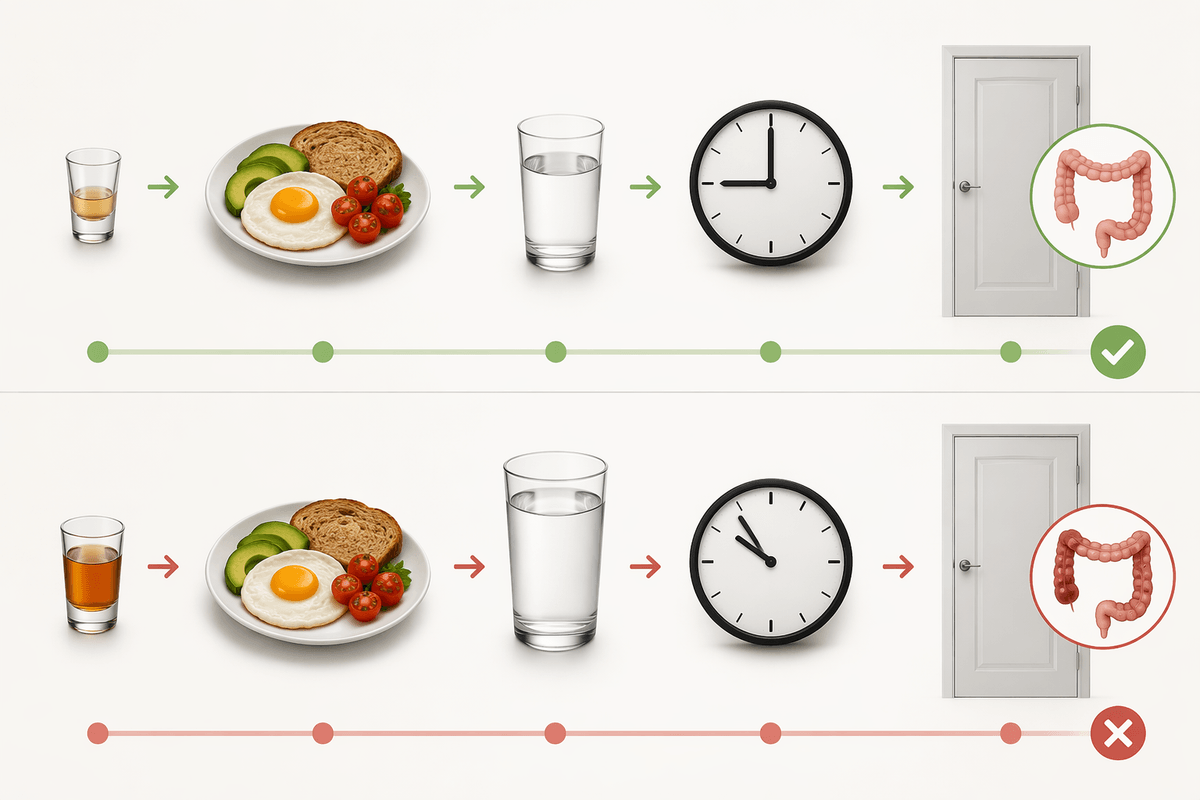
A concentrated bitter drink can change how your stomach behaves in the first hour of the day. If you take it before any food or water, it may hit a stomach that’s still dry and sensitive, which can read as nausea, refluxy warmth, or sudden gurgling. In other situations it seems to do the opposite—things move faster, you feel more regular, or you get an urgent bathroom trip that you didn’t expect from something that isn’t a laxative.
The routine around it often shifts at the same time. If wheatgrass nudges breakfast later, or replaces a few bites you usually rely on, digestion can feel “off” even when the real change is timing and volume. When the pattern is inconsistent—fine on weekdays, weird on weekends—it’s usually the schedule, not a mysterious reaction, that’s doing most of the work.
Blood sugar, appetite, and timing ripple effects
By mid-morning it can show up as a quiet mismatch: you’re not exactly hungry, but you’re suddenly scanning for something crisp, sweet, or salty. A wheatgrass shot is tiny, so it’s easy to assume it can’t affect appetite—but if it nudged you to delay breakfast, the “weird craving” can simply be your body trying to patch the gap.
In some situations, the shot lands like a clean start and makes food feel less urgent for an hour or two. That can be convenient, until it isn’t. When calories get pushed later, blood sugar can drift down slowly and then drop faster once you’re moving, talking, commuting, and thinking. The result isn’t always shakiness; it can be flat focus, impatience, or that sudden need for a pastry you wouldn’t normally notice.
Taking it on an empty stomach versus alongside even a small breakfast can change whether it feels “steady” or like it kicks the hunger can down the road. If your pattern is inconsistent—weekday shot, weekend brunch—wheatgrass ends up looking unpredictable, when the real variable may be the gap between the shot and the first real food.
Interactions and constraints that shape daily practicality
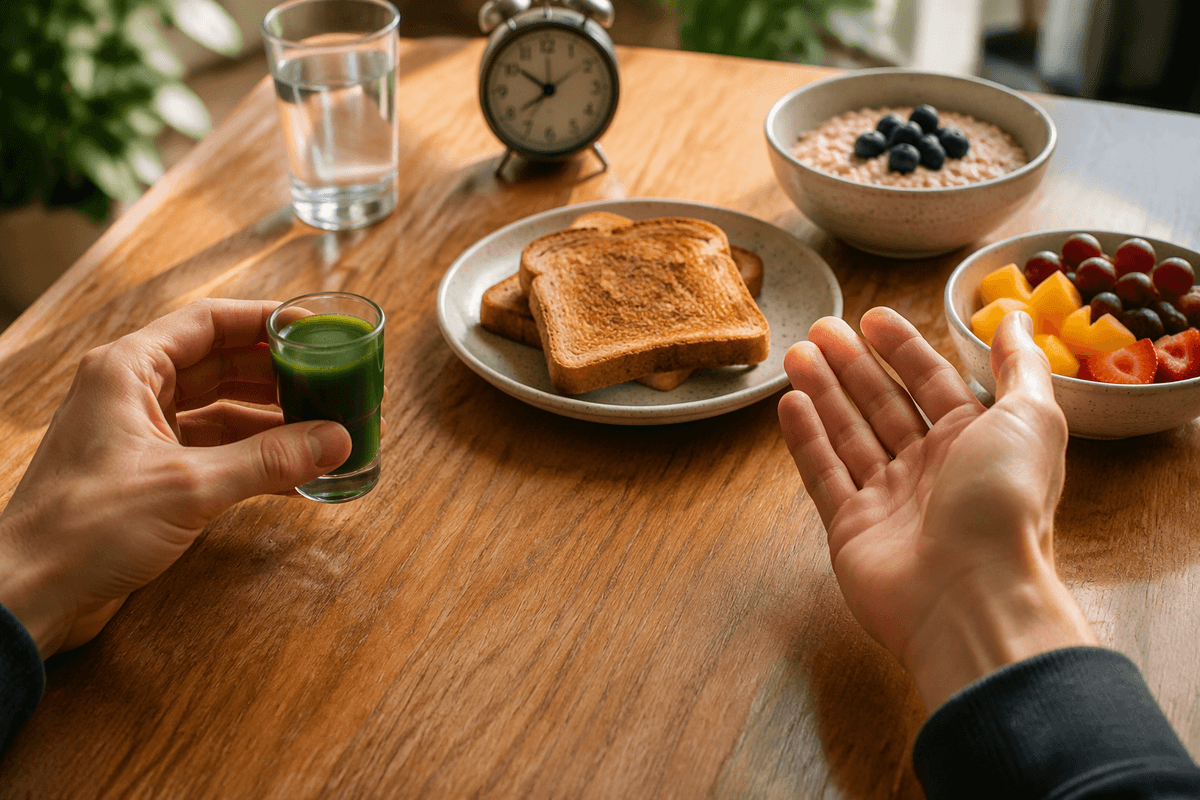
It often becomes obvious in the small frictions: you pack the shot, then realize it doesn’t travel well, or you drink it fast and chase it with whatever’s nearby. On rushed mornings, that “whatever” can be coffee, a supplement stack, a protein shake, or nothing at all. The shot hasn’t changed, but the mix around it has—and that’s when it starts feeling less like a health add-on and more like another variable you have to manage.
Some pairings can make the experience feel harsher. Bitter greens on an empty stomach, followed by hot coffee, can read as jittery or refluxy even if neither one is a problem by itself. If you also take vitamins, iron, or medications first thing, the timing can get messy: not because wheatgrass is automatically “interacting,” but because your stomach tolerance has a limit, and piling sharp, concentrated things together can tip it.
When the shot only happens on “good” mornings, any benefit gets tangled up with sleep, hydration, and a calmer start. Practicality ends up being part of the result: if it regularly crowds out breakfast or makes your first hour feel touchy, that’s a signal too.
Making sense of benefits when results stay ambiguous
Somewhere around the second week, you may catch yourself thinking, “I guess it’s helping?”—but you can’t point to a single, clean change. The shot didn’t create a dramatic lift, your digestion isn’t clearly better or worse, and the only obvious difference is that your mornings now have an extra step. That’s the awkward zone: when the ritual is solid but the “results” stay quiet.
What often makes wheatgrass feel ambiguous is that the biggest effects are indirect. If it consistently buys you time before breakfast, it may also be quietly reshaping energy and cravings later, so the day feels smoother one morning and oddly snacky the next. If it sometimes irritates an empty stomach, you may start pairing it with different foods or skipping coffee—then it’s hard to tell what you’re actually responding to: the greens, the timing, or the gap you created.
Over time, the most practical signal is repeatability. If the shot fits without pushing meals around, and your stomach feels reliably okay afterward, it may be adding a small benefit—or at least not costing you one. If it only “works” on calm, well-rested mornings, that’s not failure; it’s a clue that the structure around it is doing most of the heavy lifting.