Slovenia isn’t just a day trip
I paused on the platform at Ljubljana’s station with a paper coffee and a phone at 12%—the Bled bus was in ten minutes, and the schedule looked clean until I noticed the last return wasn’t late. On a map, Slovenia reads like a tidy cluster of day trips; in real time, it behaves more like a set of small regions with their own pacing. If you try to “just pop over,” you end up choosing between a lake view and actually hiking to one.
For a 6–8 day trip, Ljubljana works as a landing pad, not a command center. Bled is easy, but stacking Bled + Bohinj + Vintgar into one day is the kind of efficiency that looks good in a notes app and feels bad at 6 p.m. when crowds funnel onto the same promenade and you’re still hunting for dinner. The trade-off is simple: day-tripping keeps lodging stable, but it turns scenic drives and bus transfers into your main activity.
A car buys you early starts and quieter trailheads, especially if you want sunrise at a lake or a longer hike without watching the clock. Public transport is doable for the headline stops, but it’s less forgiving for detours—vineyard lunches, a short gorge walk, a late swim—because your whole day becomes anchored to departure times. If you’re already debating it, that’s usually your cue to plan at least one overnight outside Ljubljana so Slovenia can stretch a little without snapping your schedule.
How far Slovenia really stretches
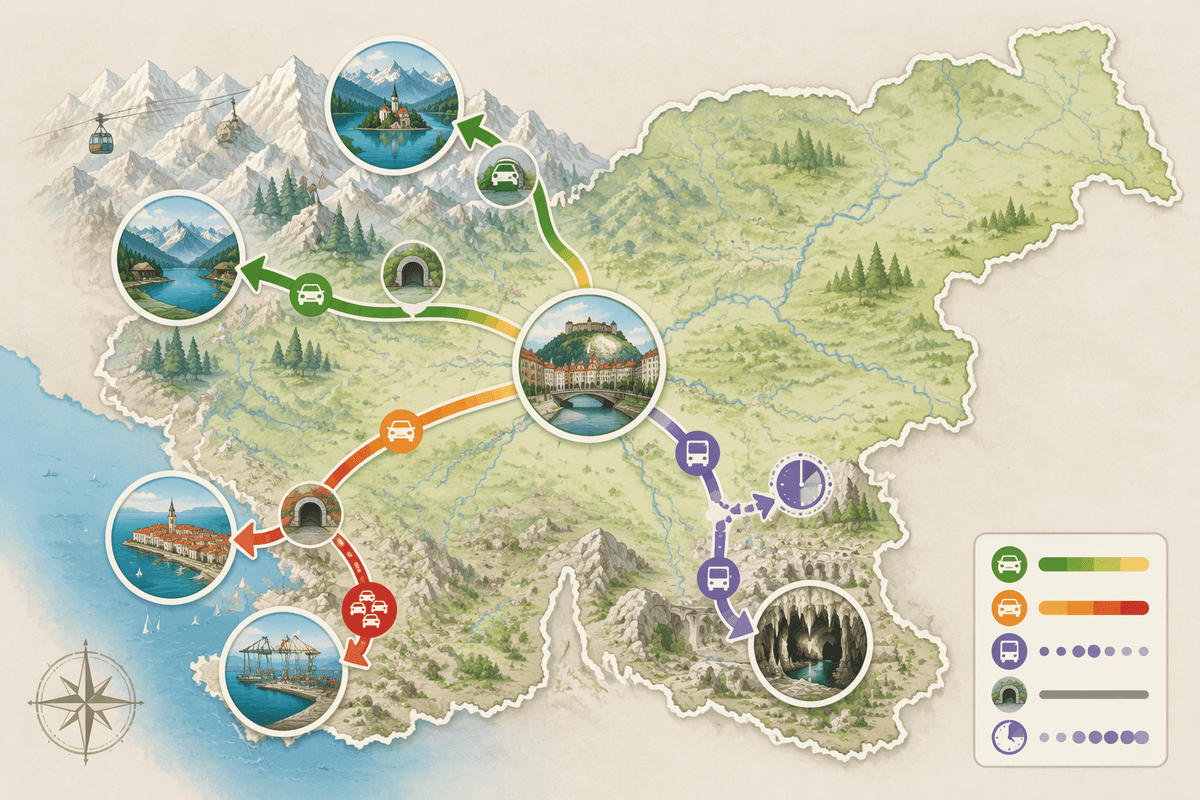
I stared at Google Maps outside Ljubljana Castle, thumb hovering over “Koper,” because it claimed just over an hour and my brain wanted to believe it. Then I remembered it was a Friday in July, my bag still hadn’t dried from an afternoon shower, and the idea of squeezing “sea air” in before dinner started to feel like a dare. Distances here look small, but the clock gets eaten by tunnels, weekend traffic, and the slow parts—parking, transfers, and waiting for a table when everyone has the same plan.
From Ljubljana, the Alps are the cleanest reach: Bled and Bohinj are close enough to day-trip, yet long enough that a late start turns “lake + hike” into “lake + line.” The coast and Karst are similar on paper but less flexible in practice; a cave slot time or a bus connection can pin your whole day, and the return trip often lands you back in the city right when you’d rather be lingering over seafood or a glass of malvasia. If you’re relying on buses, it works best for one headline area at a time, not a zigzag.
For 6–8 days, Slovenia stretches more comfortably when you let it pull you outward once or twice. One night near Bohinj (for hikes that aren’t shaped by the last bus) or one night near the Karst/coast (for caves, wine, and a slower evening) usually saves more time than it costs. If you’re the kind of traveler who hates repacking, keep Ljubljana as your anchor—but accept you’ll trade spontaneity for predictability.
Alpine lakes and mountain towns
I hesitated at the Bled rowboat dock with a ticket half-folded in my hand, watching a queue form in the sun while a tour group in matching lanyards drifted toward the promenade. The lake was exactly as pretty as promised, but it also felt managed—like a postcard with operating hours. Ten minutes later I was pricing a quick escape route to Bohinj, because “just one more stop” is how Alpine days get quietly overbooked.
Bled is worth your first look, especially if you like a tidy loop: lakeside walk, cream cake, a short climb for a viewpoint. The limitation is timing—midday in summer compresses everyone into the same few meters of shoreline, and Vintgar Gorge can turn into a slow-moving corridor if you hit it after late morning. Bohinj, by comparison, feels less curated and more usable: better for swimming, longer hikes, and the kind of afternoon where you don’t have to keep buying “experiences” to stay entertained. If you only day-trip, pick one lake per day; trying to do both becomes a race between parking lots and bus clocks.
Mountain towns are where a car starts paying for itself, not in kilometers but in options. Kranjska Gora is convenient and a bit resort-smooth; it works if you want easy logistics and a predictable dinner scene. The Soča Valley towns (like Bovec or Kobarid) feel wilder, but the trade-off is longer transit and fewer “pop in for an hour” moments without your own wheels. For a 6–8 day trip, one overnight near Bohinj or the upper Sava valley can turn the Alps from a day trip into a real chapter—early trailheads, late swims, and zero anxiety about the last bus back.
Karst caves, castles, and coast
I got to the Škocjan ticket desk with damp hair from a morning drizzle and a reservation time that suddenly felt too crisp—12:00, no wiggle room, and the next slot was hours later. The limestone air was cool, almost cave-fridge cold, but the walkway pace was set by the group in front of you, not by how long you wanted to stare into the sinkhole. On a map, it’s “Ljubljana → cave → coast,” yet in real time the day behaves like timed entries stitched together by parking and tunnels.
Škocjan and Postojna aren’t interchangeable so much as optimized for different moods: Postojna is smoother, more “show,” and easier to slot into a tight plan; Škocjan feels rawer and more vertical, but you pay for it in stairs and less control over your own tempo. If you’re relying on buses, the limitation is that caves run on schedules while you do, too—miss one connection and you’ll spend your “Karst afternoon” watching a platform clock. A car makes the side-quests possible: a quick stop at Predjama Castle, a detour for pršut in the Karst, an unplanned hour in a vineyard without doing math on the last return.
The coast (Piran for atmosphere, Koper/Izola for practicality) is close enough to tempt a day trip, but it’s often better as an overnight if you actually want the sea part—sunset, seafood, a slow swim—rather than a windy stroll and a rushed espresso. Summer crowds concentrate in the old towns, and parking becomes the hidden toll, while shoulder season trades beach energy for easier tables and cleaner pacing. If you’re choosing, pair caves + Karst wine in one day, then coast the next; combining all three works only if you like your “Mediterranean moment” framed by a return-to-Ljubljana deadline.
Vineyards, thermal spas, quiet plains
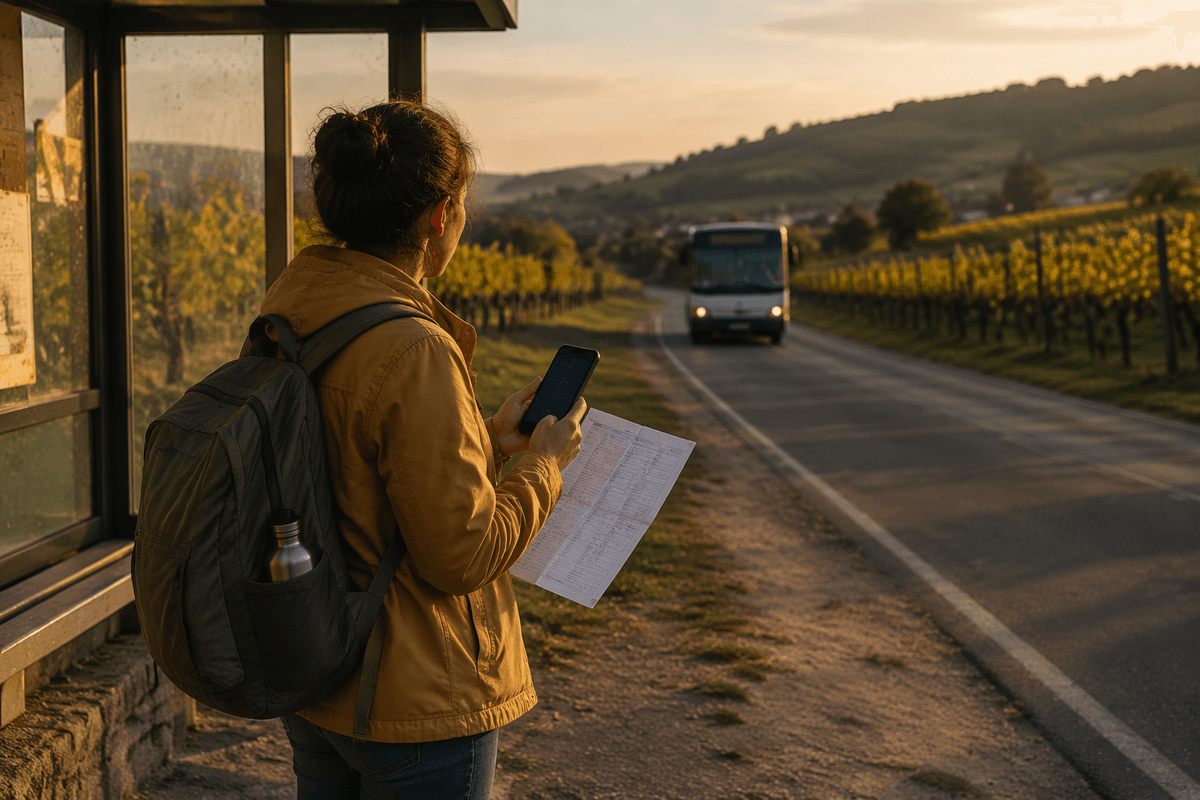
I lingered at a crossroads outside Ptuj with a paper map I didn’t trust, watching rows of vines climb a soft hill while my phone kept dropping to one bar. The plan had been a quick “wine stop,” but the tasting room only opened in a narrow afternoon window, and the bus back to Ljubljana looked like it was daring me to miss it. Compared to the Alps, the east feels slower on purpose—great when you have time, less forgiving when you’re squeezing it between hikes.
Štajerska and the Drava plains are where Slovenia stops performing and starts feeling lived-in: farm roads, cellar doors, and lunches that run long if you let them. It works best for travelers who care about local wine and don’t need a landmark every hour; if you’re here mainly for viewpoints and big hikes, it can read as “pretty” rather than essential. Without a car, you’ll spend more time aligning trains/buses than actually tasting, and wineries rarely sit where public transport is convenient.
Thermal spas (especially around Čatež and the wider panonski world toward Moravske Toplice) are the easiest way to build a rest day that still feels like travel. They’re not a cultural deep-dive in the way Piran or the Soča can be, but after two days of lake loops and stairs in a cave, warm water is a practical reset. If you’re choosing where to overnight, this region makes sense as a single detour night—go only if you want the slower pace, not because you feel you “should” cover the map.
Pick your loop by time
At 7:18 a.m. in a Ljubljana bakery line, I tried to make a “perfect” loop on my phone and immediately ran into a very real constraint: the rental car pickup didn’t open until eight, and the first bus to Bohinj would already be rolling. That ten-minute difference felt petty until I pictured it multiplying into missed trailhead starts and late check-ins. Slovenia rewards mornings more than it rewards ambitious spreadsheets.
If you have six days, the cleanest loop is one strong Alpine base plus Ljubljana: 2 nights Ljubljana (arrival, food, a flexible buffer), 2 nights Bohinj/Bled area (hikes and swims without last-bus anxiety), then 1 night in the Karst or on the coast (caves one day, sea air the next). This beats pinballing back to the capital, but it does mean repacking twice—fine for travelers who like momentum, annoying if you prefer to unpack once and settle.
With seven to eight days, you can choose your “second chapter.” Coast/Karst works if you want evenings—seafood in Piran, malvasia or teran without driving back—while the Soča Valley works if your priority is hiking and that slightly wilder mountain-town feel. Public transport can cover Ljubljana + Bled/Bohinj + a single Karst/coast hit, but it’s a tight fit for Soča and winery detours; a car is less about speed than about not spending your best hours waiting. If you’re still undecided, pick the loop that gives you two unrushed mornings where you most want to be outside.