Skip Unawatuna, chase quieter shores
I hesitated on the Unawatuna main strip at 6:10 p.m., watching three tuk-tuks argue over the same curb while the beach bars cranked up the same playlist. It wasn’t “bad,” just loud in a way that makes a sunset feel scheduled. We walked five minutes, turned inland to escape the crush, and immediately realized the real decision wasn’t crowds—it was whether the sea would actually be calm enough to get in.
If you want Unawatuna’s convenience without the shoulder-to-shoulder vibe, aim for beaches that are close enough for a quick tuk-tuk but not on everyone’s first Google list. Mihiripenna is the easiest upgrade: usually quieter, often swimmable when the reef is doing its job, and still close to small cafes. Dalawella can be gorgeous and calmer than Unawatuna, but it’s not exactly secret anymore—great if you want a sunset and a swim, less great if you’re chasing silence.
For more breathing room, Koggala’s long stretch is the simplest “empty beach” win—less snorkeling, more space, and fewer people selling you the same boat trip. Talpe’s rock pools work best at low tide (timing matters), trading easy swimming for tide-dependent dips and slippery footing. Without a scooter, keep your detours short: from Unawatuna, these are typically 10–25 minutes by tuk-tuk, which is manageable even if you’re booking day by day and don’t want to gamble on a far beach with rough surf.
Pick the coast by season
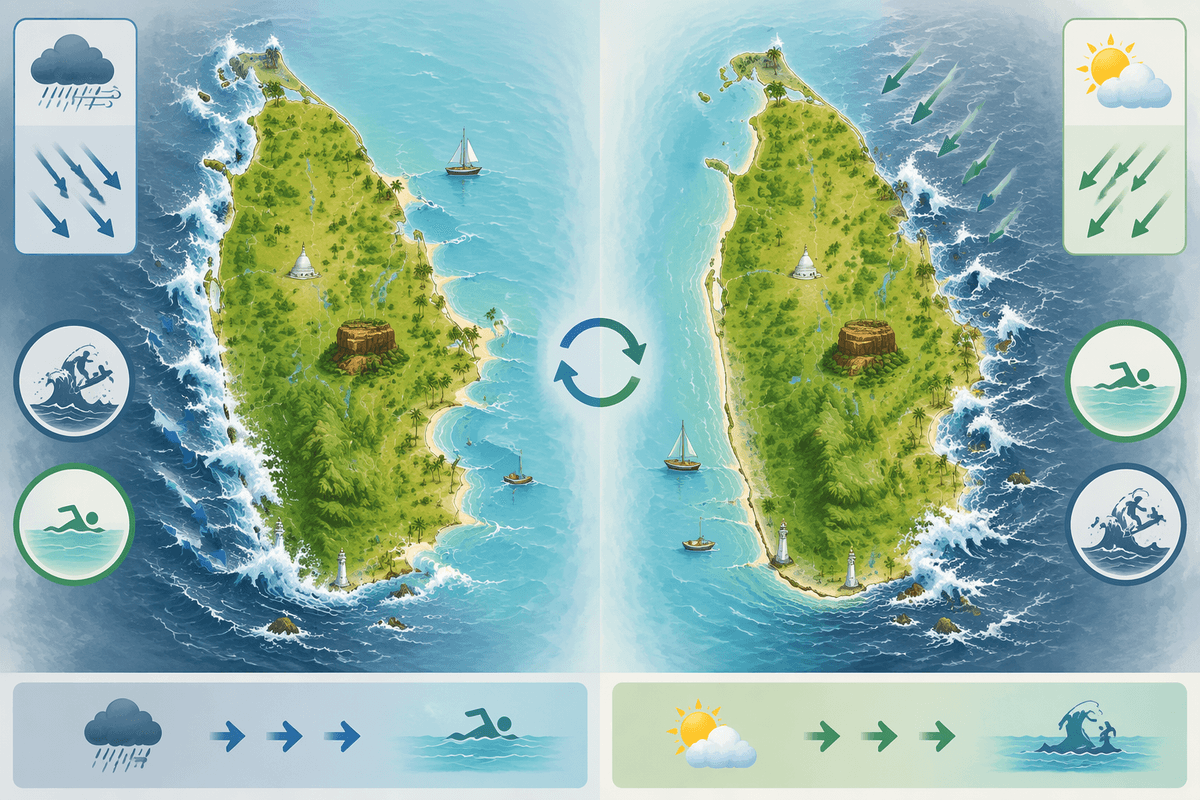
I stared at the weather app in a guesthouse doorway in Galle at 7:05 a.m., watching the wind arrows point straight at the south coast like little warnings. The map said “beach day,” but the palms outside were already thrashing, and the sea sound had that hollow thump that usually means shorebreak. It’s the kind of morning where choosing the “right” coast matters more than choosing the “right” beach.
For calm, swimmable water, season is your gatekeeper. Roughly May to September, the southwest monsoon can turn the south and west into a churn (still pretty, less forgiving for casual swimming), while the east often stays clearer and gentler—think Pasikudah or Kalkudah for easy, wade-in swims, or Nilaveli/Uppuveli if you want a wider bay feel with simpler snorkeling. Flip that around roughly November to February: the east gets moodier, and the south coast becomes the safer bet for couples who want dips between café stops.
Getting to the east mid-trip is a bigger commitment—longer drives, fewer “pop over for sunset” options, and if you’re booking as you go, you’ll feel that one lost day more sharply. If you’re not on a scooter, I’d bias toward sheltered shapes (bays like Hiriketiya when the south is behaving, or the shallow curve of Pasikudah) and make your call the night before, not after you’ve already paid a tuk-tuk to a rough beach.
South coast hideaways near Galle
I zoomed in on Google Maps outside the Galle fort ramparts, thumb hovering over a “hidden beach” pin that was, inconveniently, at the end of a skinny road with no proper turn-around. The tuk-tuk driver squinted at the screen, then at the sky, and gave me that look that means: sure, we can try, but don’t blame me if it’s all rocks. Ten minutes later we were stopped behind a delivery van, and the “shortcut” felt less romantic than it did in satellite view.
If you’re basing yourselves in or near Galle and want calmer water without a scooter, treat the Unawatuna side as your low-friction zone. Jungle Beach (Rumassala) can feel genuinely tucked away compared with Unawatuna, but it’s a short walk down and the cove can get busy late afternoon—go earlier if you want space and easier swims. Dalawella/Wijaya is the café-and-swim compromise: more people, more comfort, and a clearer read on conditions (you can literally watch the sets before committing).
For quieter stretches, keep rolling east: Koggala is still the easiest “wide and empty” option, best for long walks and sunsets rather than snorkeling. Thalpe’s rock pools are a timing bet—fun at low tide, annoying (or sketchy) when waves start slapping over the edges. If you push to Ahangama/Kabalana, it’s livelier and more surf-leaning; great for watching, less reliable for a relaxed dip. If you’re choosing on the fly, I’d pick one sheltered cove day (Jungle Beach) and one long-beach day (Koggala), then let the sea decide the rest.
East coast bays with glassy water
I realized the east coast was a different country the moment we stepped onto Pasikudah before 8 a.m.—the water looked varnished, and the loudest thing was a crow on a beach sign. After days of reading the south by the sound of shorebreak, the silence here felt almost suspicious. It’s also where timing stops being “nice to have”: arrive late and you’ll still swim, but you’ll share the bay with more day-trippers and jet skis.
For mid-budget couples who want easy, low-stress swimming, Pasikudah is the cleanest pick: a shallow, curved bay where you can wade in without negotiating waves, especially roughly May–September. Nearby Kalkudah is the trade-off—longer, wilder, fewer people, but less naturally “pool-like,” so you do a quick shoreline scan before committing (no lifeguard vibe). Facilities follow the same pattern: Pasikudah has more hotels and a few restaurant options; Kalkudah can feel sparse once you’ve dried off and want a cold drink.
If you prefer a wider-bay base, Nilaveli or Uppuveli (near Trincomalee) give you swimmable water and simple snorkeling on calm days, with more guesthouses and dinner choices than the Batticaloa side. The limitation is distance: from the south it’s often a full-day transfer (think 7–9 hours by car), which only works if you’re willing to “spend” a day for two or three glassy mornings. If that sounds fair, pick one east-coast base and stay put—beach-hopping here is what wastes time.
Wild south and deep-south sands
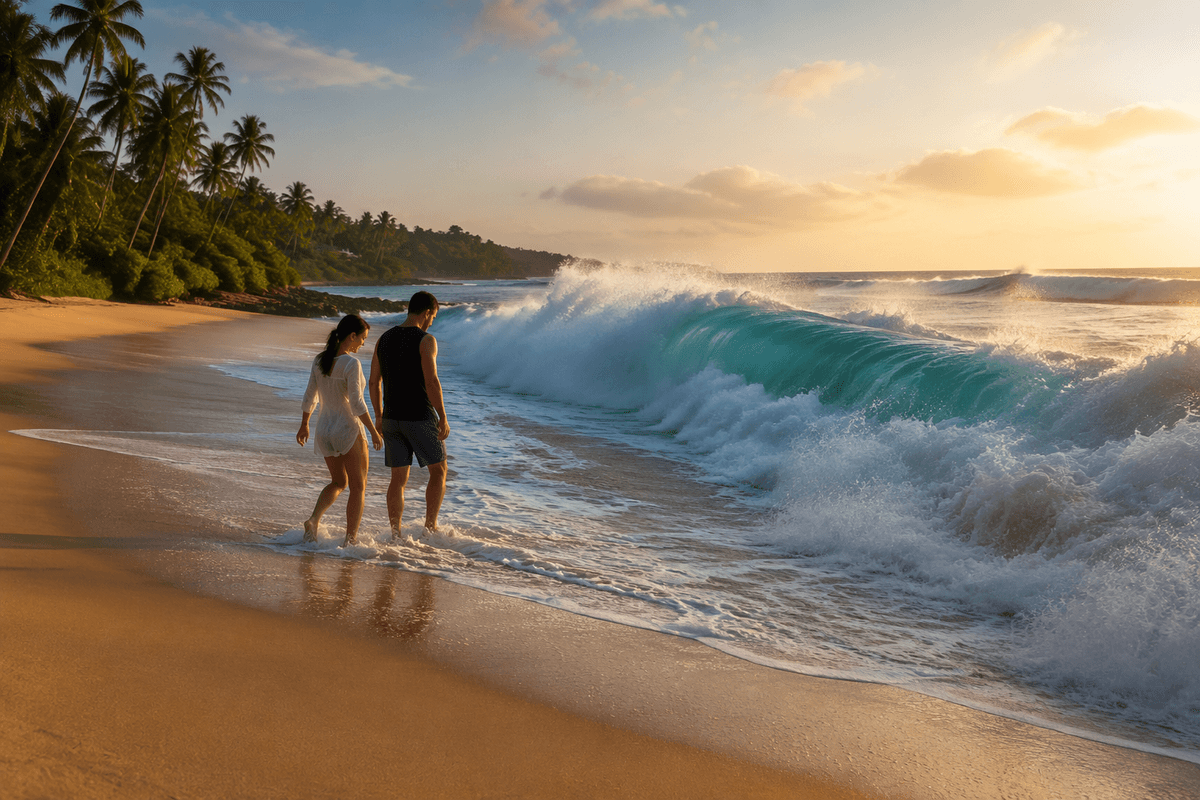
I got dropped at Tangalle’s “Silent Beach” around 4:45 p.m., sand still hot underfoot, and the sea looked postcard-perfect until a set folded hard and ran up the shore like it meant business. A couple was standing ankle-deep, testing the pull, then backing out again—no drama, just a quiet reminder that “empty” and “swimmable” don’t always overlap. Without a scooter, you feel that trade-off faster because you can’t casually bail to the next bay.
If you want wild-south atmosphere with a realistic swim plan, use Tangalle as your hub and pick coves, not long open beaches. Goyambokka is the easiest mid-budget compromise: smaller, usually calmer than the big stretches, with enough cafés that you can wait out rougher water without feeling stranded. “Silent Beach” (often near Amanwella) can be wonderfully uncrowded, but it’s more of a walk-and-sunset place when surf is up—great for space, less reliable for a long dip.
For deep-south sand that still works for non-scooter travelers, look at Rekawa (turtle beach) or Kahandamodara when you’re chasing emptiness, and accept the limitation: fewer places to eat, patchier phone signal, and the swim can be a day-by-day call. If the water feels pushy, don’t negotiate—take the sunset, then spend your “proper swim” time in a sheltered spot the next morning. That small discipline keeps the wild part fun instead of stressful.
What I’d choose for your trip
I was halfway through booking a “hidden” Tangalle guesthouse when the host messaged: cash only, last room, and no late-night tuk-tuk drop-offs on that road. The map looked like a simple detour; the logistics looked like a commitment. That’s usually my signal to pick beaches that let you change your mind without paying for it.
If you’re doing this as a 10-day, book-as-you-go trip without a scooter, I’d keep your south-coast swimming days in the low-friction corridor: Mihiripenna and Dalawella/Wijaya for reef-sheltered dips and cafés (easy to bail out if the sets look punchy), then one quieter “space” day on Koggala where the trade-off is less snorkeling, more walking. Add Jungle Beach as your early-morning cove play—better before late afternoon crowd flow, and the walk in is the price of the calmer feel.
When you want that wilder-south sunset without gambling your swim, I’d base near Tangalle and use Goyambokka as your default water check (more forgiving than open stretches, still with places to eat). If your dates land roughly May–September and you can spare a full transfer day, swap one south segment for Pasikudah for the easiest wade-in calm; otherwise, stay south roughly November–February and keep your “experiment” beaches to one per day. If you’re undecided each morning, let the sea pick: choose the bay-shaped option first, then upgrade to emptier sand later.