Why “heart support” feels vague in daily life
It often starts with something small: you take the stairs and feel a little more “aware” of your heartbeat than you used to, then you’re fine again by the time you reach the top. A week later, a routine cuff reading is higher than expected, but the next day it looks normal. That’s where “heart support” starts to feel like a fuzzy label—because the signals people notice come and go, and it’s hard to tell whether they’re about the heart itself or about sleep, stress, caffeine, or a salty meal.
Supplements can seem like a clean fix in the middle of that noise, especially when the goal is phrased as “support.” But most of what people want to change—triglycerides on labs, blood pressure trends, recovery after exercise, fewer nighttime leg cramps—moves slowly and responds to stacked habits. Even medication timing, hydration, alcohol, or a sudden change in training can nudge circulation and rhythm in ways that make a new pill feel like it’s working (or failing) when it’s really just sharing the timeline.
So the vagueness isn’t just marketing; it’s the daily experience of overlapping patterns. The tricky part is noticing when a shift looks routine-linked and steady versus when it stays inconsistent enough that the “support” story stops matching what your body is actually doing.
How supplements can influence circulation and rhythm
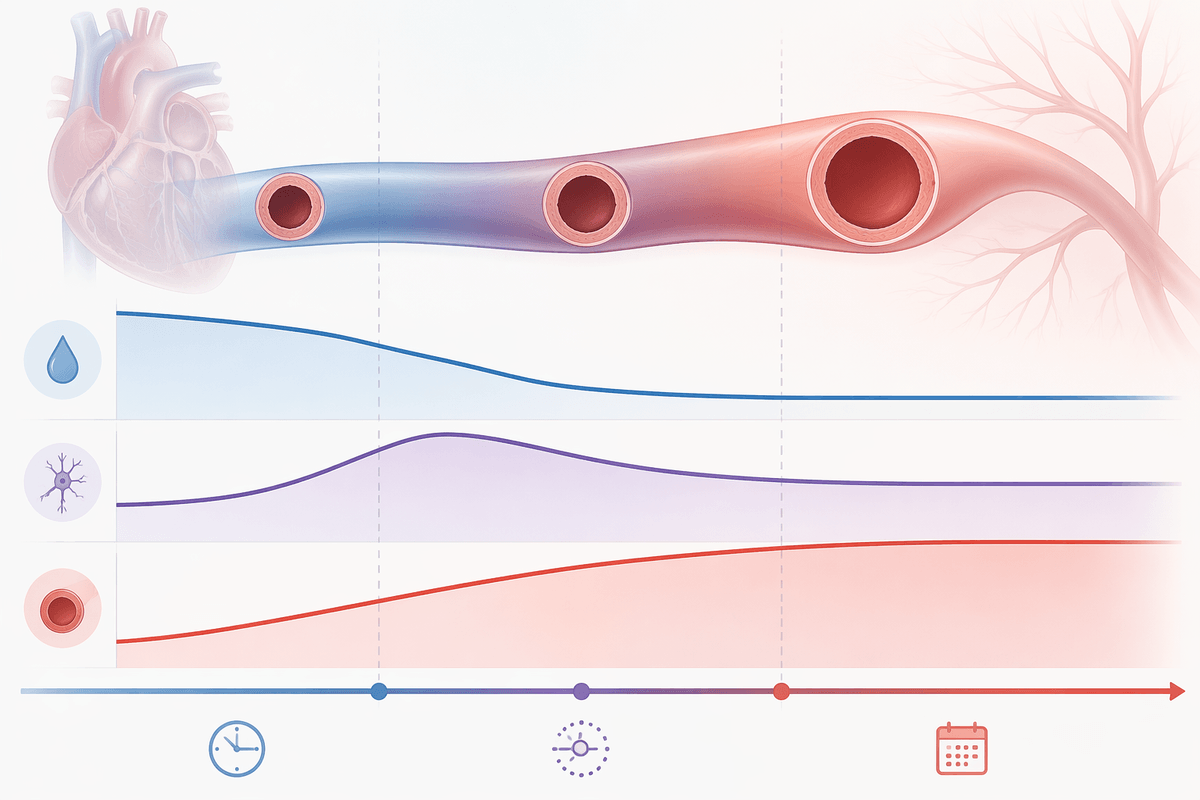
You notice it when you stand up quickly: a brief head-rush, a faster pulse, then everything settles. It can be tempting to credit—or blame—the newest supplement for that moment, even though circulation and rhythm are the kind of systems that respond to tiny changes in fluid, nerves, and blood vessel tone from hour to hour.
Some supplements mostly shift the “background conditions” rather than creating a noticeable sensation. Omega‑3s may influence blood fats and inflammation signals over weeks, which can matter for circulation trends but won’t necessarily feel like calmer beats. Magnesium can feel more immediate for some people because it’s involved in muscle and nerve signaling; the trade-off is that the same dose that feels soothing can also create digestive discomfort or drowsiness, which muddies the feedback.
CoQ10 tends to be even quieter, tied to cellular energy in a way that may show up as steadier exercise tolerance rather than a dramatic change in blood pressure. When the signals stay inconsistent, it often means the routine is driving the pattern more than the capsule is.
Omega‑3s: consistent benefits, inconsistent expectations
The first “sign” people look for with omega‑3s is often a feeling—less chest tightness after a stressful day, a calmer pulse at night, a little more stamina on a walk. And then nothing happens. That gap can feel like failure, even when omega‑3s aren’t the kind of supplement that reliably produces a day-to-day sensation you can track.
Where they tend to be more consistent is on slower markers, especially triglycerides, because omega‑3 fats shift how the body packages and moves fat in the bloodstream over time. The problem is that labs don’t live in a vacuum: a stretch of better sleep, less alcohol, or fewer takeout meals can “improve numbers” in the same window, while a vacation week or a training break can blur the picture just as easily.
So omega‑3s can be steady in what they influence, but inconsistent in what people expect to feel. If the only feedback you’re using is a heartbeat moment or a single cuff reading, the story can swing too fast for what these fats actually do.
Magnesium choices reveal different comfort trade‑offs
The giveaway is often in the gut, not the chest: a new magnesium shows up as looser stools, a heavy “settled” feeling at night, or an unexpected morning sluggishness. People can read that as proof it’s “doing something for the heart,” when it may simply be the form and dose changing how water moves through the intestines or how relaxed the nervous system feels.
Different magnesium types can create different trade-offs. Some are chosen because they’re gentler on digestion, while others are more likely to act like a laxative at the same labeled dose. That matters because discomfort changes routines—skipped doses, smaller meals, less sleep—which can quietly affect blood pressure readings or exercise recovery more than the mineral itself.
And even when magnesium is a good fit, the feedback is messy: fewer cramps one week, none the next, then a return after a hotter day or more caffeine. The pattern can make it feel personal and immediate, but it’s often interacting with hydration, sodium/potassium balance, and stress load in ways that don’t hold still.
CoQ10: subtle support with delayed feedback loops
It can show up as a small annoyance before it feels like a “heart” issue at all: your usual walk feels a bit flatter, or a workout takes longer to feel comfortable, even though your pulse and blood pressure don’t look dramatically different. That’s often when CoQ10 enters the conversation—less as a fix for a scary symptom, more as a way to feel like your energy has a little more margin.
CoQ10 is tied to how cells handle energy, so any benefit may land in the background: slightly steadier tolerance, less of that “running on fumes” feeling, or fewer off-days that don’t have an obvious explanation. Those shifts can take weeks, and they’re easy to confuse with changes in sleep debt, training consistency, or even a stretch of lower stress that just happens to overlap.
It also tends to be hard to “measure” in daily life. When the only checkpoint is a sporadic cuff reading or how you feel on one busy afternoon, CoQ10 can seem like it’s doing nothing—when the bigger issue is that the feedback loop is delayed, and the routine keeps rewriting the experiment.
Fiber, plant sterols, and the cholesterol perception gap

The shift is easy to miss: you add a fiber supplement or a sterol spread, and the most noticeable change is that meals feel heavier, you’re a little more bloated, or your usual bathroom rhythm gets unpredictable. That discomfort can make it feel like the “cholesterol plan” is backfiring, even though the main signal you’re aiming for isn’t a sensation—it’s a lab value weeks later.
Fiber and plant sterols tend to work through the everyday mechanics of digestion. Fiber can trap more bile acids so the body pulls cholesterol to make more, while sterols can compete with cholesterol for absorption. The perception gap is that both can lower LDL without making you feel “healthier,” and sometimes without changing weight or energy at all.
And because the feedback is delayed, a single restaurant week, missed doses, or a switch in breakfast routines can blur the result. When numbers move, it can feel mysterious; when they don’t, it can feel personal—when it may just be that the routine wasn’t steady enough to read.
Herbs, electrolytes, and the safety‑signal problem
Sometimes it’s a crampy calf that sends you to an electrolyte powder, and sometimes it’s a slightly higher blood pressure reading that makes an herb capsule feel like a safer, “more natural” choice. The confusing part is that both can create sensations that look like reassurance—less pounding after a salty meal, fewer skipped-beat moments during a stressful week—without telling you whether the underlying pattern is actually steadier.
Electrolytes are often just a re-balance of fluid and nerves: more sodium can help some people feel less lightheaded, while more potassium can soften the way the body holds onto salt. But the same scoop can behave differently depending on heat, exercise, alcohol, sleep debt, and whether you’re already taking a diuretic. Salt substitutes and “high-potassium” mixes can also quietly become a risk when kidney function isn’t perfect, which isn’t always something you can feel day to day.
Herbs have a similar safety-signal problem. Garlic, hawthorn, hibiscus, and “circulation blends” may shift vessel tone or clotting tendency in ways that don’t announce themselves—until they overlap with blood pressure meds, blood thinners, or even dehydration. When results feel inconsistent, it’s often less about the herb being “weak” and more about the routine and medication context being the real variable.