Most trips fail by choosing the wrong rim
I froze over a paper map at the Vegas hotel desk, thumb covering “West Rim,” because it looked so close—two and a half hours, tops. Then I pictured the reality: a mid-morning departure, a hot parking lot, and a ticket line that eats the exact window you wanted for big views. The distance was the easy part; the rim choice was the trap.
From Vegas, the West Rim wins on raw drive time, which matters if you’re trying to squeeze the canyon into a single long day without turning the car into your main activity. It can feel more like an attraction you funnel through—shuttles, timed entry, add-ons—especially if you arrive late morning when the crowd flow is thickest. It works best for couples who want a “see it, photograph it, leave” schedule and don’t care about stacking multiple viewpoints or easy hikes.
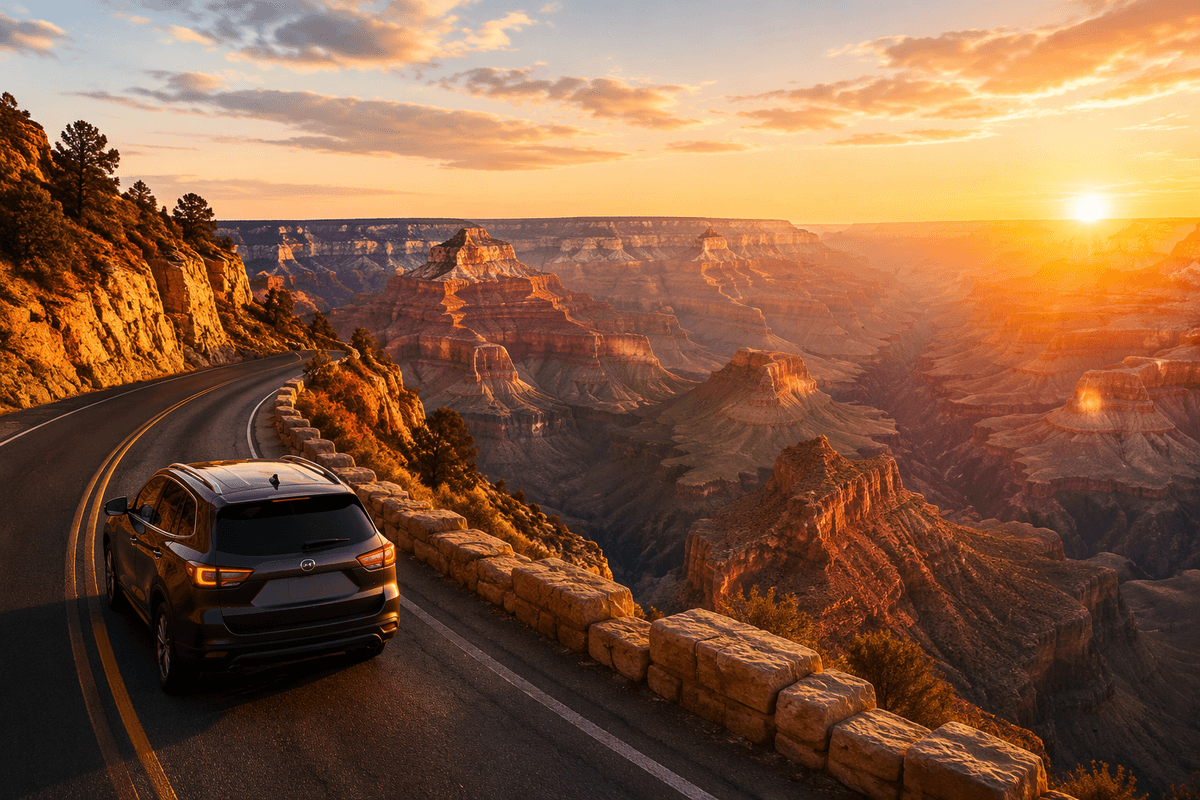
The South Rim costs you more windshield hours, but it pays back in options: you can pivot between viewpoints, fit in a straightforward walk along the rim, and chase sunrise or sunset without feeling like you’re racing a closing gate. For a 3–4 day loop, it’s the better anchor because lodging and viewpoint variety let you trade one longer drive for two calmer canyon days. Tours can simplify timing, but DIY usually wins if you’re sensitive to rigid schedules and parking friction—just plan your arrival earlier than your optimism suggests.
Lock your dates around sunrise and traffic
At 4:35 a.m., my phone alarm went off in a Vegas room that still smelled faintly like last night’s smoke, and I actually hesitated—because leaving that early feels dramatic until you’ve watched a sunrise window disappear behind a line of brake lights. I’d set coffee for the lobby, tossed a hoodie in the daypack, and aimed to have the car rolling before the Strip looked awake. The goal wasn’t hero mode; it was buying slack.
For the South Rim, your “dates” are really two light events: sunrise and sunset, and everything else should bend around them. Sunrise is calmer than late morning—cooler temps, emptier lots, fewer shuttle queues—while a noon arrival often means hunting parking like it’s a side quest. You pay with sleep, but you get the canyon when it feels wide and quiet instead of processed through crowds. If you’re only doing one canyon day, prioritize sunrise over squeezing in more viewpoints later.
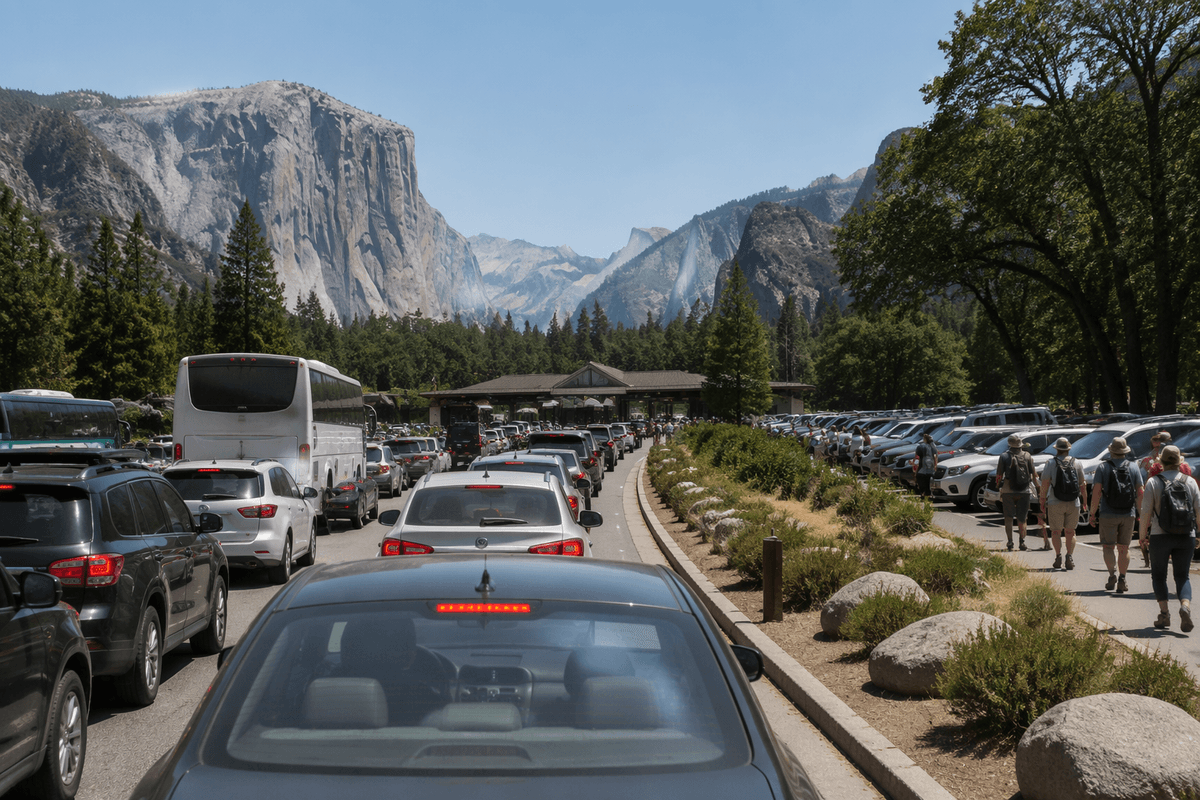
Traffic doesn’t just live on the road; it shows up as friction at gates, lots, and the first popular overlooks. Weekends, holiday weeks, and summer afternoons amplify that, and even a “simple” stop can balloon if you arrive at the same time as every tour bus. If long drives make you tense, build the schedule to avoid the peak pinch—early departures, a real food stop before you’re starving, and a hard cutoff that protects your sunset margin.
Build the drive with can’t-miss stops
I watched the ETA jump by nine minutes while inching behind a slow RV on US-93, just past a “Next services” sign that suddenly felt personal. We’d left Vegas “early,” but not early enough to beat the clump of dam-bound traffic. The map still looked clean; the road felt like a negotiation.
If you’re driving South Rim, pick stops that earn their minutes instead of just breaking up the drive. Hoover Dam is the classic temptation: it photographs well, but parking and walking time can quietly cost you the same margin you wanted for a sunset viewpoint. A better trade for most couples is a fast fuel-and-restroom reset in Kingman, then a deliberate Route 66 detour only if you like kitsch—Seligman scratches that itch with minimal route penalty compared with wandering downtown Williams.
Build the last 90 minutes like you’re protecting a reservation, because you are—your light window. Aim to reach the park/Tusayan area before late afternoon so you’re not hunting parking when your legs are already tired. Viewpoints work differently depending on timing: Desert View can be brilliant when the sun is lower, while hopping overlooks near Grand Canyon Village is easier once you’ve mentally switched from “drive mode” to shuttle-and-walk mode. If the day starts to slip, cut one stop, not the sunrise plan tomorrow.
Book the essentials before you go
At 10:12 p.m., I had three browser tabs open and one stupid problem: the “affordable” room in Tusayan vanished while I was comparing cancellation policies. The price jump wasn’t subtle—more like a penalty for hesitating—and suddenly Williams looked tempting again. It felt like I was booking a bed, but really I was booking tomorrow’s stress level.
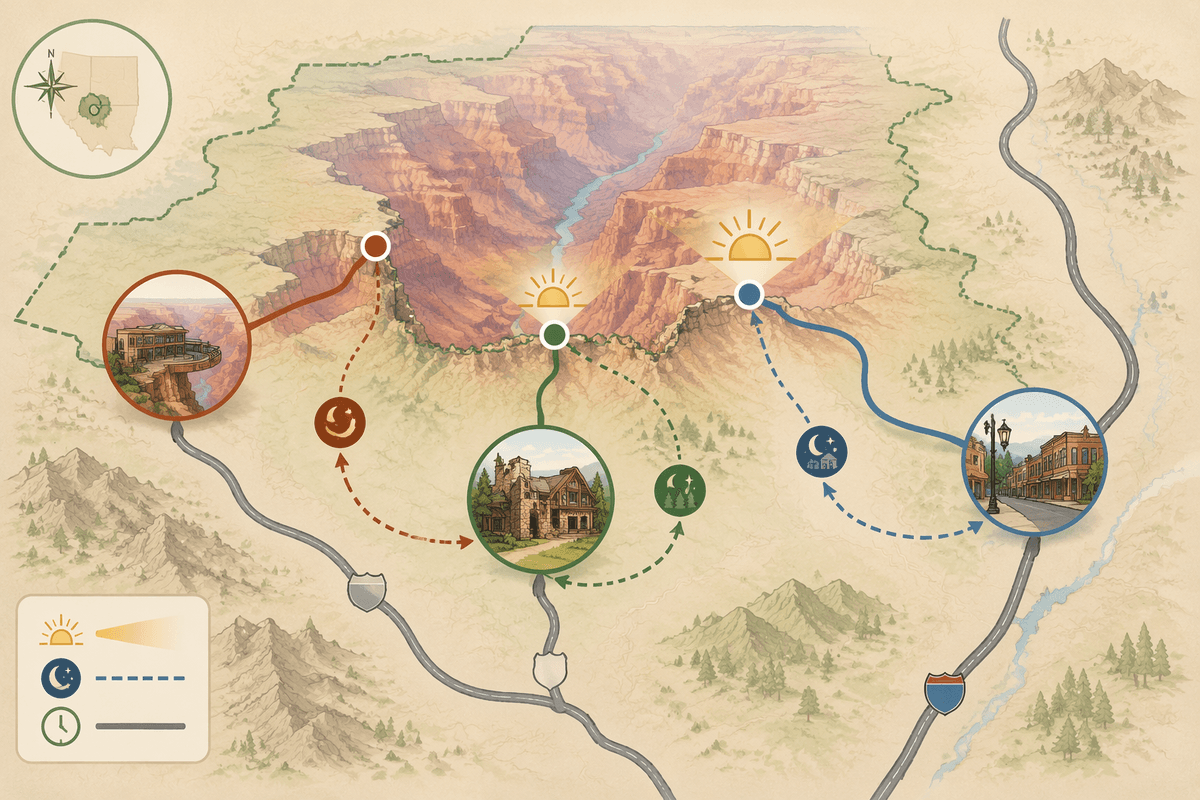
For a South Rim plan, lodging is the only reservation that truly changes your trip shape. Inside the park or in Tusayan costs more, but it buys you early-morning access and an easier return after sunset—two moments that are hard to “DIY” if you’re still an hour away with tired eyes and a dark highway. Williams works if you’re price-sensitive and okay trading a calmer sunrise for a longer commute and fuller lots; it doesn’t work if long drives already make you edgy.
The West Rim flips the equation: the bed can wait, but your entry package can’t. You’re dealing with a more attraction-style flow—shuttles, add-ons, and peak-hour lines—so booking the exact experience you want (and showing up early) matters more than finding the perfect hotel. If you’re torn, commit to one splurge: either pay for Tusayan/inside-the-park to protect sunrise, or pay for the West Rim experience you’ll actually enjoy, then stop “upgrading” in the parking lot.
My best plan for one to three days
At 6:18 a.m., I stood in the Vegas hotel hallway with a half-zipped daypack, watching the elevator numbers crawl like they were daring me to leave “after breakfast.” The coffee was hot, the car was parked somewhere far too big, and my calendar was pretending this was a casual drive. That tiny hesitation mattered, because the canyon doesn’t care if you slept in.
If you only have one day, I’d stop trying to force the South Rim and make the West Rim your clean win: leave before 7:00 a.m., arrive early enough that shuttles feel like transport instead of a line, and plan to be rolling back toward Vegas before the mid-afternoon heat and crowd swell. It works for couples who want a big view and minimal lodging juggling; it doesn’t work if you’ll resent paying for add-ons or being funneled through a fixed flow.
With two days, go South Rim and sleep in Tusayan or inside the park: Day 1 is the transfer (keep stops lightweight), then grab sunset without negotiating a long drive afterward. Day 2 is sunrise + an easy rim walk + a few viewpoints chosen for light, not completion. With three days, add one “buffer” half-day—either a quieter morning at the canyon or a Williams/Route 66 detour—so one slow truck or full lot doesn’t steal the whole trip. If you’re torn, pick the plan that protects your mood at 6:00 p.m., not your pride at noon.